Best Espresso Machine for Decaf (2026)
As an Amazon Associate I earn from qualifying purchases.
Almost every "best espresso machine" guide is written for caffeinated coffee. That is a problem, because decaf does not behave like caffeinated coffee in the basket, and the features that make a machine forgiving with a medium-roast Colombian are not the same features that rescue a fast, sour decaf shot.
This guide is written the other way around. We start from what decaf does differently, then rank machines on how well they handle it.
Why decaf is harder to brew
Three things change once the caffeine is removed.
The bean structure is compromised. Decaffeination puts green coffee through water, solvent, or CO2 processing before it is ever roasted. That process swells and softens the cell walls. After roasting, the bean is more brittle and more porous. Ground up, it offers noticeably less resistance to pressurized water — which is why your shot suddenly gushes on a grind setting that worked fine yesterday on caffeinated beans.
It degasses faster. More porous beans release CO2 more quickly. Crema on decaf is often paler and thinner than on caffeinated coffee at the same roast age, and it fades faster in the cup. This is normal and not a defect in your machine.
The forgiving window is narrower. Because flow resistance is lower and the bean is more fragile, small errors in dose, distribution, or temperature show up faster. Decaf punishes sloppiness.
The practical consequence: you will grind finer, you will care more about temperature stability, and you will want a machine that starts gently rather than slamming nine bars into a weak puck.
What to actually look for
Best Espresso Machine for Decaf
As an Amazon Associate I earn from qualifying purchases.
As an Amazon Associate I earn from qualifying purchases.
Pre-infusion or low-pressure start. This is the single most useful feature for decaf. Ramping pressure gradually lets a fragile puck settle and saturate before full pressure hits it, which directly reduces channeling. Machines with genuine pre-infusion (not just a delayed pump) are meaningfully more forgiving here.
Temperature stability. Decaf tolerates a narrower brew temperature window before it turns papery or sour. PID control or a thermal system with fast recovery matters more here than on caffeinated coffee, where you can get away with a few degrees of drift.
A sane path for two bean types. This is the requirement no other buying guide mentions, and for many decaf drinkers it is the deciding factor. Most people who drink decaf also drink caffeinated — decaf in the evening, regular in the morning. If your grinder has a hopper, every bean switch means purging, and every shot carries some retained grounds from the previous bean. A single-dose grinder solves this. A machine with a built-in hopper grinder makes it worse.
Shot feedback. A timer, a pressure gauge, or a volumetric readout. You cannot fix a fast decaf shot you did not notice was fast.
Our picks
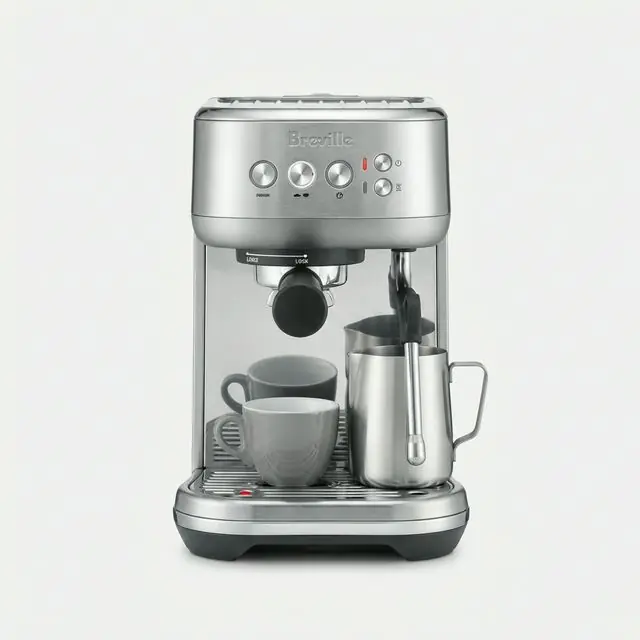
Best overall: Breville Bambino Plus
The Bambino Plus wins for decaf specifically because of what it does not have: a built-in grinder. That sounds backwards until you consider bean switching. Pair it with a single-dose grinder and you can run decaf and caffeinated cleanly with no purging ritual.
It also has the two features that matter most. The ThermoJet system reaches brew temperature in about three seconds and holds it, so there is no temperature surfing and no drift between shots. And it runs a low-pressure pre-infusion that ramps rather than slams — exactly what a soft decaf puck needs.
The 54mm basket is smaller than commercial standard, which produces a deeper puck that is slightly more channel-prone. Compensate with proper WDT and puck prep and a precision basket.
Read our full Bambino Plus review and our Bambino decaf settings guide.
Best for learning: Gaggia Classic Pro
The Gaggia Classic Pro takes the opposite approach. No PID, no automation, a 15 to 20 minute warm-up, and a commercial 58mm portafilter. It demands that you learn temperature surfing.
For decaf, that trade cuts both ways. The wider 58mm basket produces a shallower, more evenly extracting puck, which helps a fragile decaf grind. But the lack of temperature control means you have to manage the narrower decaf window by hand.
Where it wins is the ceiling. The Classic has been in production since 1991, parts are everywhere, and you can add a PID, upgrade the OPV spring, and fit a pressure gauge over time. If you want to genuinely understand why your decaf shots behave the way they do, this is the machine that teaches you.
See the full Gaggia Classic Pro review and our Gaggia decaf settings.
Best all-in-one: Breville Barista Express
The Barista Express is the most popular starter machine on the market, and for a single-bean-type household it is excellent value: grinder, machine, and tamper in one footprint.
For decaf specifically, we have to flag the trade-off honestly. The integrated conical grinder has a hopper. Switching between decaf and caffeinated means emptying the hopper, running the grinder to clear the burr chamber, and accepting that the first shot after a switch carries retained grounds from the previous bean. If you only drink decaf, this is a non-issue and the Express is a strong buy. If you switch daily, it is a genuine daily friction.
Full details in our Barista Express review, and see how it stacks up in Bambino Plus vs Barista Express.
Best premium: Rancilio Silvia Pro X
The Silvia Pro X gives you dual boilers and PID control over both brew and steam. For decaf that means the temperature window you care about is set numerically and held, instead of estimated from a light.
It is a commercial-derived machine with a 58mm group and real thermal mass. If your decaf routine involves milk drinks in volume, the separate steam boiler removes the wait entirely. Read the Silvia Pro X review.
Best super-automatic: DeLonghi Magnifica Start
If you want decaf espresso without a workflow, the Magnifica Start is the honest recommendation. Bean to cup, one button.
The caveat is the one we raised above: super-automatics hide the variables decaf is most sensitive to. Grind adjustment is coarse and you get no shot timer. When a decaf shot runs thin, your correction options are limited. Look for a bypass chute if you want to run pre-ground decaf occasionally without disturbing your main hopper. Our Magnifica Start review covers the details, and the Philips 4400 is a close alternative.
The grinder is still the real answer
We rank machines here because that is the question people ask, but the honest answer is that your grinder decides whether decaf tastes syrupy or hollow. Decaf needs to be ground finer than caffeinated coffee at the same roast level, which means your grinder needs usable adjustment resolution at the fine end — exactly where cheap grinders run out of steps.
It also needs low retention, because retention is a cross-contamination problem for anyone alternating bean types. A single-dose grinder solves both at once: you weigh the beans you want, grind them all, and nothing meaningful stays behind.
If you are building a decaf setup and have to choose where the money goes, put it in the grinder. See best espresso grinders under $500.
Quick recommendations
- You only drink decaf, want it easy: Bambino Plus with any decent single-dose grinder.
- You switch between decaf and regular daily: Bambino Plus or Gaggia Classic Pro, separate grinder, never a hopper.
- You want one box on the counter: Barista Express, accepting the bean-switching friction.
- You want zero workflow: Magnifica Start or Philips 4400.
- You want to learn properly: Gaggia Classic Pro.
As an Amazon Associate I earn from qualifying purchases. Buying through this link costs you nothing extra.
Whatever you choose, expect to grind finer than you would for caffeinated coffee and to re-dial when you open a new bag. Decaf ages differently, and a setting that worked on week one will not hold at week five. Our decaf dial-in guide walks through the process.
Frequently Asked Questions
Do I need a different espresso machine for decaf?
No, any espresso machine will brew decaf. But decaf is genuinely harder to dial in than caffeinated coffee, so machines with stable temperature, gentle pre-infusion, and a low-retention grinder path make the process far less frustrating. The machine matters less than the grinder, but it does matter.
Why does decaf pull faster than regular coffee on the same grind setting?
Decaffeination softens the bean's cell structure before roasting. The resulting grounds are more brittle and offer less resistance to water, so the same grind setting produces a faster shot. Most people need to go two to four steps finer on decaf than on the same roast in caffeinated.
Can I run decaf and regular beans through the same grinder?
Yes, but you will get cross-contamination from grounds retained in the burr chamber and chute. A typical hopper grinder can hold several grams. If you are drinking decaf for medical reasons, use a single-dose grinder and purge with a few grams of the new bean, or keep a second grinder.
Is a super-automatic machine good for decaf?
Super-automatics are convenient but they hide the variables that decaf is most sensitive to. Most only offer a coarse grind adjustment and no shot-time feedback, so when a decaf shot runs fast you have limited ability to correct it. A dual-hopper or bypass-chute model is the better choice if you switch bean types daily.
Best Decaf Espresso Editorial Team
Research-based reviewsWe research every machine, grinder and bean from manufacturer specs, manuals and long-term owner reports, and we read them with decaf in mind. We don't run in-house tests.
You Might Also Like
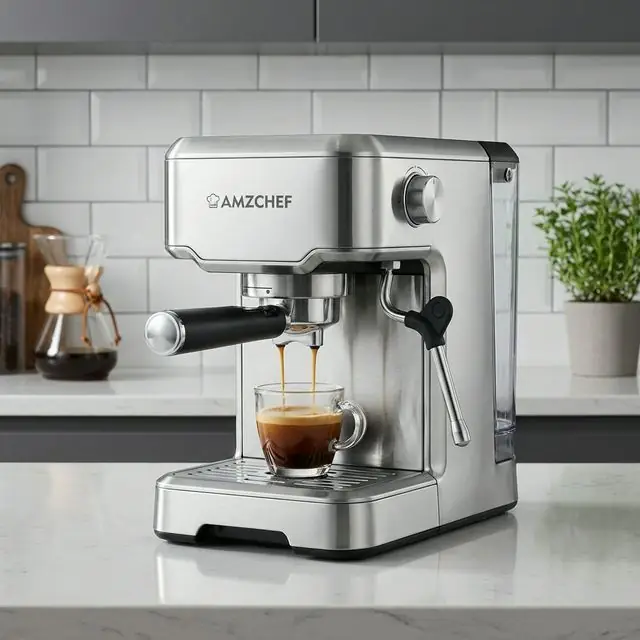
Is a 20 Bar Espresso Machine Good?
Espresso extracts at about 9 bars at the puck, so what does a 20-bar rating actually buy you? Here is what the number really measures, why marketing loves it, and what to look at instead.
Read More
Gaggia Classic Pro Decaf Settings: Dose, Grind & Temp Guide
Decaf runs fast and punishes sloppy temperature on a single-boiler machine. Here are our exact Gaggia Classic Pro decaf settings: dose, yield, grind direction, and a temp-surfing routine that actually repeats.
Read MoreBreville Bambino Decaf Settings: Dose, Grind & Shot Guide
The dose, grind, and shot settings to start from for sweet decaf espresso on the Breville Bambino Plus, plus a step-by-step dial-in walkthrough.
Read MoreEnjoyed this article?
Follow us for more practical espresso and decaf insights delivered to your inbox.