Breville Bambino Plus Review (2026): The Best Small Machine for Decaf Espresso?
As an Amazon Associate I earn from qualifying purchases.
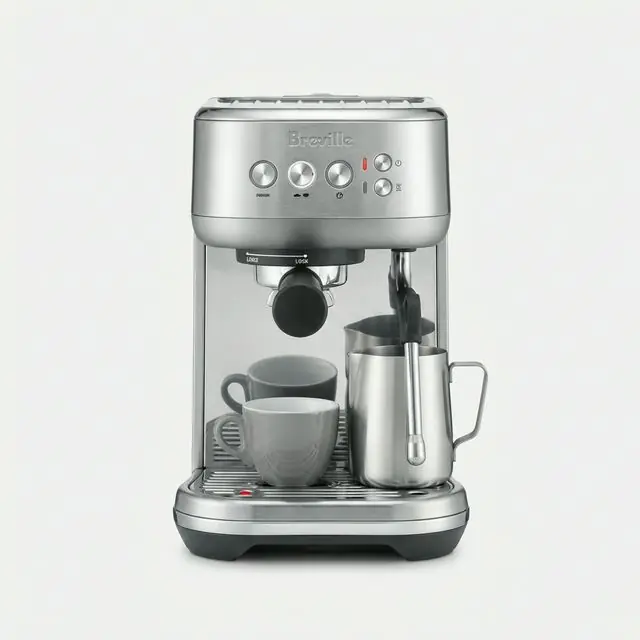
The Breville Bambino Plus is the best small espresso machine for decaf drinkers in 2026, because its 3-second heat-up makes a single evening decaf shot genuinely effortless. If you have a small kitchen but big espresso ambitions, this is almost certainly the machine on your shortlist, and it has earned its place at the top of it. The question we get asked most, though, is the one this review is built around: is it any good for decaf?
Quick Verdict: Small Machine, Serious Espresso
| At a glance | Our take |
|---|---|
| Best for | Small kitchens, milk-drink lovers, evening decaf drinkers |
| Heat-up time | ~3 seconds (ThermoJet) |
| Portafilter | 54mm stainless steel |
| Milk system | Automatic steam wand with manual override |
| Decaf suitability | Excellent, once you tighten the grind |
| Skip it if | You want 58mm commercial compatibility or a hot water spout |
The short version: the Bambino Plus delivers real 9-bar espresso and cafe-quality milk from a footprint barely wider than a toaster. It has limitations, and we will cover all of them, but none of them are deal-breakers for the people this machine is built for. Browse our full espresso machine rankings to see where it sits against the field.
The 3-Second Heat-Up Changes How You Drink Espresso
The headline feature of the Bambino Plus is the ThermoJet heating system. Traditional single boilers take 15 to 20 minutes to properly stabilize; the ThermoJet flash-heats only the water it needs and is ready to pull a shot about three seconds after you press the button.
For the morning rush, that is an obvious win. But we think the ThermoJet matters even more after dinner, and we will get to exactly why in the decaf section below. There is no thermal mass to manage, no waiting around, and no guilt about leaving a boiler running. You press, you pull, you are done.
The flip side of low thermal mass is that the group head itself stays cool. Run a quick blank shot through the empty portafilter before the first espresso of a session; it takes ten seconds and noticeably improves temperature stability on that opening shot.
Automatic Microfoam That Actually Works
The "Plus" in the name refers to the automatic steam wand. A sensor in the drip tray monitors milk temperature while the machine textures the milk to your chosen setting: three temperature levels and three froth levels (Low, Medium, High).
Owners consistently report that the Medium froth setting produces remarkably consistent microfoam, smooth and glossy enough to pour basic latte art. Almost nothing else with an automatic wand at this price can say that. Cheaper machines give you stiff, bubbly foam; the Bambino Plus gives you something close to what a competent barista produces by hand.
If you want full control, hold the steam button and the wand behaves manually. Steam power is modest compared to a dual boiler, so a 12-ounce pitcher takes a little longer to texture, but the auto-purge function that clears the wand after every use keeps maintenance painless. For households where one person makes the drinks and everyone else just wants a flat white that tastes right, the auto mode is quietly brilliant.
How It Handles Decaf
This is a decaf-first site, so this is the section we care about most. The good news: the Bambino Plus is one of the strongest decaf machines in its class, for one structural reason and one practical one.
The structural reason is the heat-up time. The single most common decaf use case is not "decaf all day", it is one decaf shot in the evening. Most people will not wait 20 minutes for a Gaggia or a Silvia to warm up at 8 p.m. for a single cortado, so the machine sits cold and the decaf habit dies. The Bambino Plus removes that friction entirely. Three seconds from cold to brewing means an after-dinner decaf is as easy as flipping on a kettle, and for most people that is the difference between a decaf routine that sticks and one that doesn't. As a decaf lifestyle machine, the ThermoJet is not a convenience feature; it is the whole argument.
The practical reason is that decaf's quirks are easy to manage on this machine. Decaffeinated beans come out of processing more brittle and less dense, they grind finer-feeling, produce more fines, and shots tend to run faster than the same recipe with regular beans. The fix is simple: start a step or two finer than your regular setting and expect to keep tightening. The Bambino's programmable shot buttons and consistent pump pressure make that dial-in process predictable rather than frustrating. If you are new to this, our guide to dialing in decaf espresso walks through the whole process.
Here are our recommended starting points for dialing in decaf on the Bambino Plus. Treat these as a launch pad, not gospel; every bean and grinder combination lands somewhere different.
| Dose (g) | Yield (g) | Time (s) | Temp |
|---|---|---|---|
| 18 | 38–40 | 26–30 | Default (run a blank shot first to pre-heat) |
A few notes on that recipe. We recommend running decaf at a slightly longer ratio, closer to 1:2.2 than 1:2, because decaf crema is thinner and the longer pull rounds out sweetness. If your shot gushes through in under 20 seconds, grind finer before you change anything else. And because decaf's freshness window is shorter than regular coffee, buy smaller bags more often; our current favorites are in our roundup of the best decaf espresso beans.
We have also published a dedicated, step-by-step companion piece with exact grind, dose, and temperature adjustments for this machine: the Breville Bambino decaf settings guide. If you own this machine and drink decaf, read that next.
The 54mm Limitation
The Bambino Plus uses a 54mm portafilter rather than the commercial 58mm standard. In the cup, the difference is smaller than the internet suggests, but it has two real consequences.
First, the 54mm basket is deeper for the same dose, which makes the puck more sensitive to uneven distribution. Channeling shows up faster if your prep is sloppy, and since decaf already produces more fines than regular coffee, careful distribution matters even more here. A dosing funnel and a consistent tamp fix most of it.
Second, the accessory ecosystem is narrower. Most baskets, tampers, and distribution tools are designed around 58mm first, so you are shopping a smaller (though now much improved) 54mm aisle.
Neither issue changed our verdict. They just mean the grinder and the prep tools matter, which brings us to the next section.
What You Need to Buy Alongside It
The Bambino Plus does not come with everything you need for great shots, and budgeting for the full setup upfront saves disappointment later.
A real grinder. This is non-negotiable. The included pressurized basket can mask a bad grind, but genuine espresso needs a burr grinder with fine adjustment. Our top pairing pick is the DF64 Gen 2, a single-dosing flat burr grinder that handles brittle decaf beans cleanly and makes the fine adjustments decaf demands trivially easy. If you are weighing it against the other single-dosing favorite, our Niche Zero vs DF64 Gen 2 comparison breaks down which suits the Bambino better.
A dosing funnel. A 54mm funnel costs little and eliminates the mess and uneven distribution that cause channeling in the deep Bambino basket. Of all the cheap espresso accessories out there, this one earns its counter space fastest.
A scale. Espresso is a ratio game, and decaf's fast-running shots make weighing output essential. The Acaia Lunar is the luxury pick that fits perfectly on the Bambino's compact drip tray; any 0.1g espresso scale will do the job if the Lunar is outside the budget.
With grinder, funnel, and scale accounted for, you have a complete setup that fits in roughly two feet of counter and pulls shots that embarrass machines twice the price.
Bambino Plus vs Gaggia Classic Pro
The other machine on every beginner's shortlist is the Gaggia Classic Pro, and they represent opposite philosophies. The Gaggia is a heavy, commercial-style 58mm machine with a manual steam wand, a huge modding community, and a 15-to-20-minute warm-up. The Bambino Plus is light, fast, and automated.
For decaf drinkers specifically, we lean Bambino: the instant heat-up suits the one-shot-in-the-evening pattern far better, and the auto milk lowers the skill floor. The Gaggia wins on longevity, repairability, and tinkering headroom. Our full Breville Bambino vs Gaggia Classic comparison breaks the two down category by category if you want the complete head-to-head.
Build Quality and Long-Term Ownership
The Bambino Plus is built to a price, and it shows in weight rather than reliability. The brushed stainless shell looks sharp, but the machine is light enough that you need to steady it with one hand while locking in the portafilter. The drip tray is small and fills quickly, especially if you run pre-heating blank shots.
Long-term owner reports are reassuring: reliability complaints are rare for this machine. The ThermoJet has fewer hot, wet components sitting under pressure all day than a traditional boiler, which is encouraging for longevity, though it is not a machine the modding community rebuilds the way they do a Gaggia. Maintenance is simple: regular descaling (especially in hard-water areas), backflushing with the included cleaning disc, and wiping the auto-purged steam wand. Replacement parts like gaskets and shower screens are cheap and easy to swap.
Two ownership quirks to know. There is no dedicated hot water spout, so Americanos mean running a blank shot through the group head. And the small water tank fills from the rear, which is mildly annoying if the machine lives under a cabinet. Neither is a deal-breaker in practice.
Pros
- Compact: Fits on even the most crowded counters.
- ThermoJet speed: Ready to brew in about three seconds, which makes evening decaf effortless.
- Auto milk: Genuinely good automatic microfoam with manual override.
- Real espresso: Regulated 9-bar extraction, programmable shot volumes.
Cons
- Lightweight: You hold the machine while locking in the portafilter.
- 54mm portafilter: Deeper puck, narrower accessory ecosystem.
- No hot water spout: Americanos require a blank shot through the group head.
- Small drip tray and tank: Expect frequent emptying and refilling.
Verdict: Who Should Buy the Bambino Plus?
Buy it if you are a beginner who wants real espresso without a learning cliff, your counter space is tight, you drink milk drinks daily, or, above all, you are a decaf drinker who wants an evening shot without a 20-minute boiler warm-up. For that last group, we think it is the best machine on the market, full stop.
Skip it if you want a machine to tinker with and upgrade over a decade (get the Gaggia Classic Pro), you need 58mm commercial compatibility, or you regularly make back-to-back milk drinks for a crowd and need stronger steam power.
The Breville Bambino Plus remains our default recommendation for compact home espresso in 2026, and our top pick for the decaf lifestyle by a comfortable margin.
As an Amazon Associate I earn from qualifying purchases. Buying through this link costs you nothing extra.
Tech Specs
- Heating system: ThermoJet (~3 second heat-up)
- Portafilter: 54mm stainless steel
- Milk system: Automatic steam wand with temperature/texture settings, manual override, auto-purge
- Pressure: 15-bar pump, regulated to 9-bar extraction
- Water tank: 64 oz, rear-fill
- Footprint: Roughly 7.6" wide, one of the smallest full-pressure machines sold

Marcus Vane
Equipment SpecialistMarcus has spent over a decade in the specialty coffee industry, from managing high-volume cafes in Melbourne to technical consulting for home espresso equipment manufacturers. He specializes in thermal stability and grinder burr geometry.
You Might Also Like
Bambino Plus vs Barista Express: Which Breville for Decaf?
The Barista Express bundles a grinder. That is its biggest selling point and, if you drink decaf and regular, its biggest liability. Here is the honest comparison.
Read More
Breville Bambino Decaf Settings: Dose, Grind & Shot Guide
The exact dose, grind, and shot settings we use to pull sweet decaf espresso on the Breville Bambino Plus, plus a step-by-step dial-in walkthrough.
Read More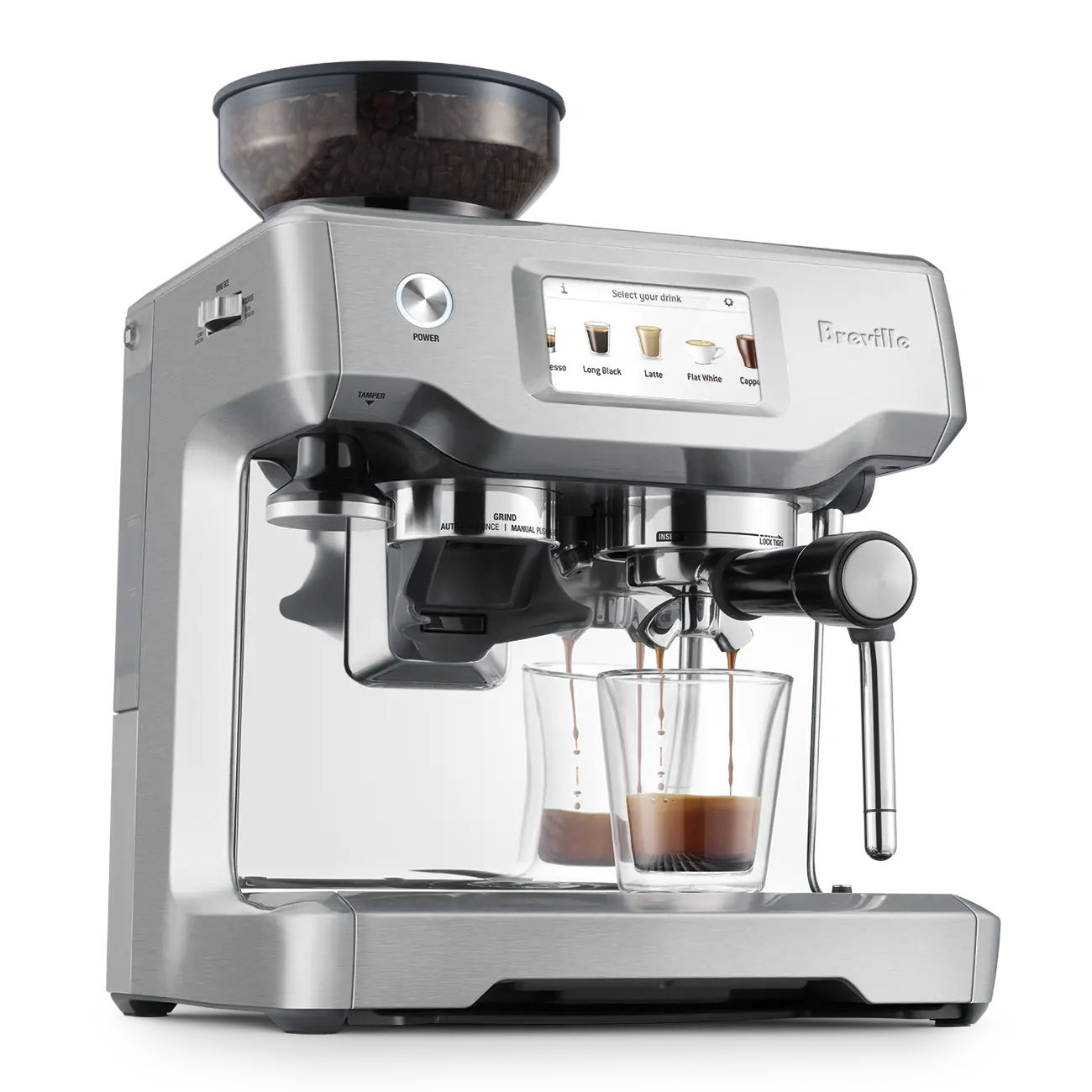
Breville Barista Touch Review (2026)
Our Breville Barista Touch (BES880BSS) review: touchscreen workflow, ThermoJet speed, and whether the premium price is worth it for home baristas.
Read MoreEnjoyed this article?
Follow us for more practical espresso and decaf insights delivered to your inbox.