Niche Zero Review (2026): Still the Single-Dosing Benchmark for Decaf Espresso
As an Amazon Associate I earn from qualifying purchases.
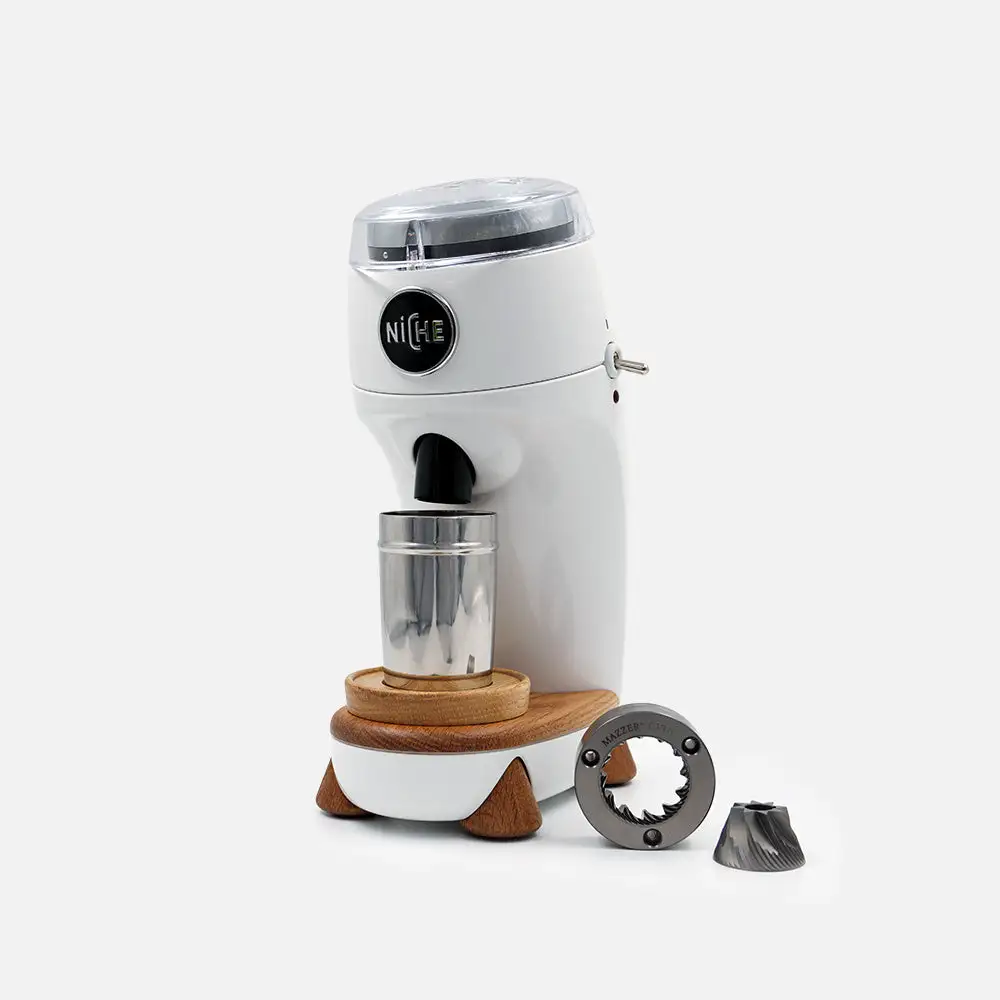
The Niche Zero is still the single-dosing benchmark in 2026, and for decaf drinkers specifically it remains the best grinder we can recommend, full stop. Seven years after it kickstarted the home single-dosing movement, cheaper rivals have arrived in numbers, but none of them combine the Niche's near-zero retention, quiet motor, and tidy workflow in one box. Here's our long-term take, with a decaf-first lens you won't find in most reviews.
Quick verdict at a glance
| Category | Our take |
|---|---|
| Burrs | 63mm Mazzer-made conical, body-forward profile |
| Retention | ~0.2g stated; matches owner weigh-ins |
| Workflow | The cleanest in class: no bellows, no mess |
| Noise | One of the quietest espresso grinders in its class |
| Decaf suitability | Outstanding: zero stale beans, instant caf/decaf switching |
| Weak spots | Price, stock availability, no burr upgrades, plastic dosing cup |
| Best for | Decaf drinkers, milk-drink fans, anyone who hates cleanup |
Why the Niche Zero is still the benchmark single-doser
The Niche Zero did not invent single-dosing, but it made it practical. Before it, weighing your beans per shot meant fighting grinders designed around full hoppers: static cling, popcorning beans, and a few grams of yesterday's coffee hiding in the chute. The Niche solved that with a straight-through grind path where beans drop from the 63mm conical burrs directly into the dosing cup below.
Niche states retention at roughly 0.2g, and owner weigh-ins consistently bear that out. Load 18.0g, and 17.8g to 18.0g typically lands in the cup without bellows, brushes, or percussive maintenance. That consistency is the whole point: what you weigh in is what you brew, shot after shot.
It is also remarkably civilized to live with. The high-torque, low-RPM motor is quiet enough for a 6 a.m. shot in an apartment, the aluminum body with oak trim looks like furniture rather than lab equipment, and the stepless adjustment ring lets you make tiny grind changes with clear, repeatable reference numbers. Across everything in our grinder reviews hub, the Niche is still the grinder we'd point to when you just want coffee without a project.
Why it's ideal for decaf drinkers
This is where the Niche Zero goes from very good to genuinely hard to replace. Decaf has a shorter freshness window than regular coffee. The decaffeination process strips some of the bean's protective structure, so decaf stales faster once roasted and degrades quickly once ground. A traditional hopper grinder, where half a bag of beans sits exposed to air for a week, is about the worst possible home for decaf.
Single-dosing eliminates that problem entirely. Your decaf stays sealed in its bag or a one-way-valve container until the moment you weigh out a dose. Nothing oxidizes in a hopper, and nothing gets ground ahead of time. If you are spending real money on the best decaf espresso beans, this is the workflow that protects that investment.
The second decaf superpower is instant switching. Most households that drink decaf also drink regular: caffeinated shots in the morning, decaf after dinner. With a hopper grinder, switching means emptying the hopper, purging the burr chamber, and throwing away a few grams of expensive coffee every single time. With the Niche, you grind your morning dose of regular, then drop in 18g of decaf that evening, and the ~0.2g of crossover is genuinely negligible. No purging, no waste, no caffeine sneaking into your nightcap.
Grind settings for decaf on the Niche Zero
Decaf beans behave differently in the burrs, and the Niche's stepless dial makes the adjustment painless. Because decaffeinated beans are more brittle and less dense after processing, they fracture more readily, feed through the conical burrs a touch faster, and produce more fines. The practical result is that decaf shots tend to run faster than regular at the same setting, so plan to grind finer and tighten further as you dial in.
As a rule of thumb, a decaf that pours nicely usually lands roughly two to four marks finer on the Niche dial than a comparable regular bean. Here are sensible starting points; treat these strictly as recommended starting points for dialing in, not gospel:
| Dose (g) | Yield (g) | Time (s) | Temp |
|---|---|---|---|
| 18 | 38–40 | 26–30 | 94°C / 201°F |
| 18 | 36 | 28–32 | 95°C / 203°F (darker decafs: 92°C / 198°F) |
Expect thinner crema than you get from regular beans; that is normal for decaf and not a sign of a bad grind. The stepless ring's repeatability means once you find your decaf number, you can flip between your two settings in seconds. For the full process, including how to read a gushing decaf shot, see our guide to dialing in decaf espresso.
The workflow, start to finish
A full Niche routine takes under a minute and leaves the counter clean:
- Weigh the dose. 18.0g of beans straight into the supplied dosing cup or a small bowl.
- Load and lid. Tip the beans into the burr chamber and close the flip lid, which doubles as the safety interlock.
- Grind. Flip the switch; the grinder runs quietly for 15 to 20 seconds and shuts off when you flip it back.
- Dose and tamp. The grounds land in the cup sitting on the magnetic-ish recessed platform. Give it a gentle swirl, invert into the portafilter, settle, and tamp.
That's it. No bellows to pump, no anti-static spray ritual required (a single RDT drop of water on the beans helps in dry winters), no chute to brush out. Static is minimal, mess is minimal, and the grind path is so short that cleaning the burr chamber is a once-a-month, two-minute job. If your current grinder makes you dread the process, the Niche makes grinding feel like flipping a light switch.
Espresso character: body first
The 63mm Mazzer-made conical burrs produce a classically bimodal particle distribution: a main peak of intended grind size plus a population of fines. In the cup, that translates to a heavier, more syrupy texture with rounded, blended flavors rather than sharply separated notes. Think traditional Italian espresso rather than a light-roast tasting flight.
For decaf, this is a feature rather than a compromise. Decaf's acidity is naturally more muted than regular coffee's, and the processing softens the brighter top notes, so chasing flat-burr "clarity" with decaf often just gets you a thinner, hollower shot. The Niche's body-forward profile plays to decaf's strengths: chocolate, caramel, and nut tones land with weight, and milk drinks made with decaf taste rich instead of watery. A sugarcane-process Colombian decaf through the Niche makes a flat white that most guests will never clock as decaf.
If you mainly drink straight shots of ultralight roasts and crave flavor separation, a flat-burr grinder is the better tool, and we will get to that below.
The honest cons
No grinder this loved escapes criticism, and the Niche has real flaws:
- Price. At around the price of a great sub-$500 grinder plus a couple hundred more, it costs significantly more than the flat-burr single-dosers that arrived in its wake. You are paying a premium for refinement, not raw grind quality.
- Availability. Niche still sells primarily direct from the UK in batches. Stock comes and goes, shipping takes time, and warranty service from outside the UK is slower than dealing with a domestic retailer.
- No burr upgrades. The Zero is a sealed ecosystem. There is no official path to different burr geometries, while the DF64 platform has a thriving aftermarket. What you buy on day one is what you grind with in year five.
- The plastic dosing cup. For a grinder with oak trim and an aluminum body, the included dosing cup feels cheap. It works fine, but most owners end up buying a metal replacement, which stings at this price.
- Body over clarity. Covered above, but worth repeating: if flavor separation is your priority, conicals are not the answer.
Niche Zero vs DF64 Gen 2: the short version
The DF64 Gen 2 is the Niche's most serious rival and the comparison most buyers agonize over. The short version: the DF64 Gen 2 brings 64mm flat burrs, more clarity in the cup, upgradeable burrs, and a meaningfully lower price, while the Niche counters with a quieter motor, cleaner workflow, lower fuss, and better resale value. The DF64 Gen 2 needs its bellows and a little more ritual to hit similar retention numbers; the Niche just does it.
For decaf specifically, we lean Niche: the body-forward conical profile suits decaf's muted acidity, and the zero-fuss switching matters more in a two-coffee household. But it is a genuinely close call, and the right answer depends on your roast preference and budget. Read our full Niche Zero vs DF64 Gen 2 comparison for the category-by-category breakdown, and our standalone DF64 Gen 2 review if you are leaning flat-burr.
As an Amazon Associate I earn from qualifying purchases. Buying through this link costs you nothing extra.
Verdict: who should buy the Niche Zero in 2026
- Decaf drinkers and mixed caf/decaf households: buy it. Nothing makes daily decaf easier, fresher, or less wasteful. This is our standing recommendation for a decaf-first setup.
- Milk-drink fans and traditional espresso lovers: buy it. The syrupy, body-forward shots are exactly what lattes and classic blends want.
- Light-roast clarity chasers: look at the DF64 Gen 2 instead. Flat burrs will serve your palate better, and you will save money.
- Tight budgets: wait or go flat. The Niche Zero holds its value so well that buying used is a low-risk path, but if the price is simply out of reach, the DF64 Gen 2 delivers most of the performance for less.
Seven years on, the Niche Zero is no longer the only good single-doser. It is still the benchmark every new arrival gets measured against.

Marcus Vane
Equipment SpecialistMarcus has spent over a decade in the specialty coffee industry, from managing high-volume cafes in Melbourne to technical consulting for home espresso equipment manufacturers. He specializes in thermal stability and grinder burr geometry.
You Might Also Like
Niche Zero vs DF64 Gen 2: Which to Buy
Niche Zero is the cleaner daily workflow grinder; DF64 Gen 2 is the better value for flat-burr clarity and future upgrades. Here is how to choose.
Read More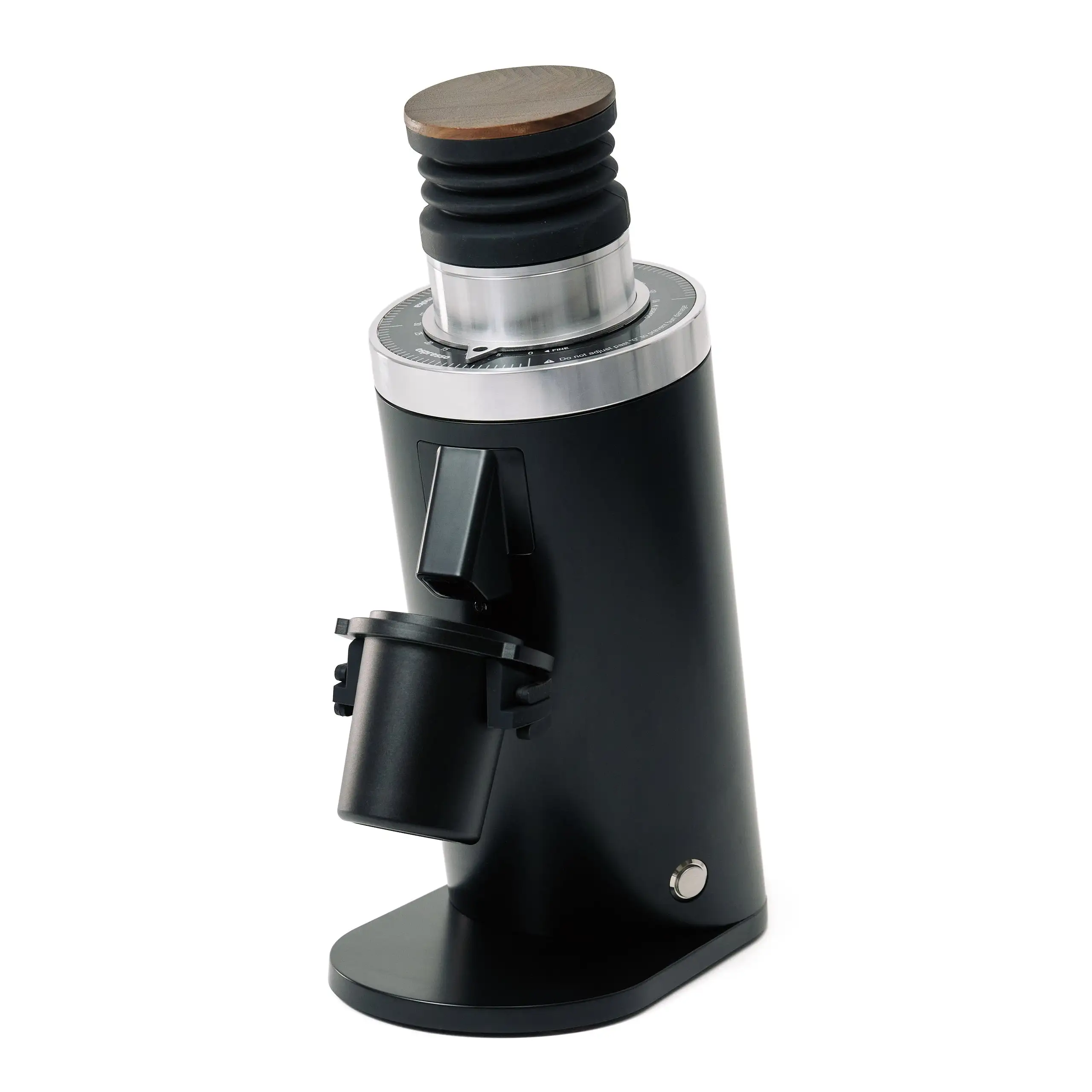
DF64 Gen 2 Review (2026): The Value Flat Burr for Decaf Drinkers
The DF64 Gen 2 fixes the original's popcorning and clumping problems and delivers serious 64mm flat-burr clarity for the money. For decaf single-dosers, it might be the smartest grinder under $500.
Read More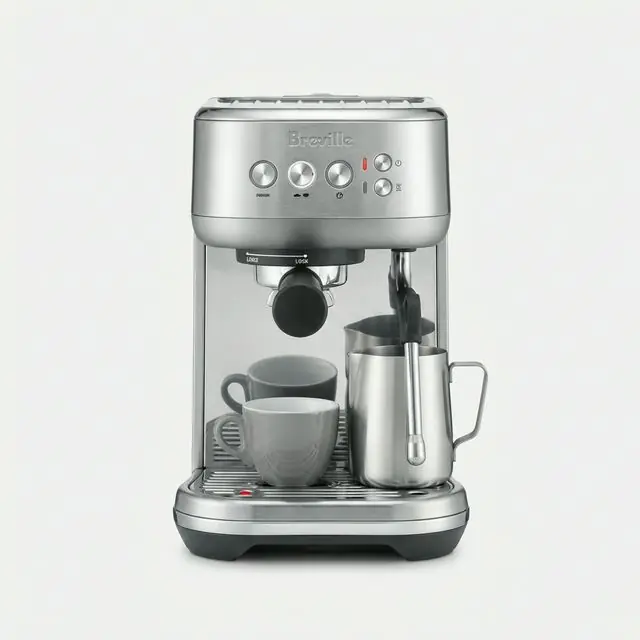
Breville Bambino Plus Review (2026): The Best Small Machine for Decaf Espresso?
A decaf-first look at the compact Breville Bambino Plus: why the 3-second heat-up makes it the best small espresso machine for evening decaf drinkers.
Read MoreEnjoyed this article?
Follow us for more practical espresso and decaf insights delivered to your inbox.