De'Longhi Magnifica Start Review
As an Amazon Associate I earn from qualifying purchases.
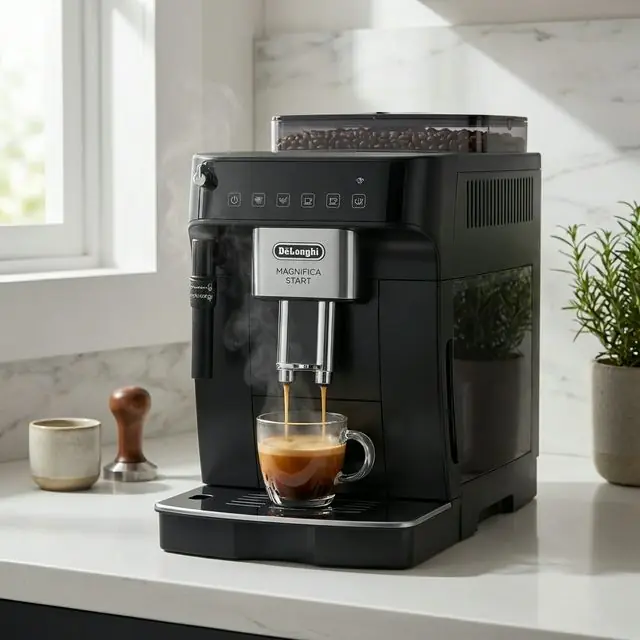
The De'Longhi Magnifica Start (ECAM22022B) strips away the touch screens and complex menus to focus on the essentials: freshly ground beans and simple operation. In a market flooded with $1,000+ super-automatics, this machine asks a fair question: how much do you actually need?
Key Features
- Built-in Conical Burr Grinder: 13 adjustable settings for precise grinding.
- Manual Steam Wand: Unlike many super-autos, this gives you control over milk frothing, allowing for true microfoam if you have the skill.
- One-Touch Drinks: Dedicated buttons for Espresso, Coffee, and Americano.
- Removable Brew Group: Easy to take out and rinse, ensuring long-term hygiene.
- 1.8L Water Tank: Holds enough for roughly 8-10 drinks before refilling.
Performance
Espresso
Surprisingly good. The extraction is consistent, and the 15-bar pump delivers a nice layer of crema. It handles dark roasts particularly well. Medium roasts come through clean, though lighter roasts can taste slightly under-extracted — a common limitation at this price tier where brew temperature options are limited.
The Grinder: 13 Settings
Thirteen grind settings sounds limiting on paper, and honestly, it is a step down from the 18+ settings on higher-end De'Longhi models. But here's the thing: for a super-automatic where you're not manually dosing or tamping, 13 settings is perfectly adequate. You'll find your sweet spot within the first few days and rarely touch it again. The conical burrs produce a reasonably consistent grind, though they do retain a small amount of grounds between sessions — your first shot of the day might taste slightly stale if the machine sat overnight.
Milk Texturing
The manual panarello wand is a double-edged sword. It's harder to use than an auto-frother, but creates much better texture once you master it. You can actually pour latte art with this machine. The wand heats up quickly and produces enough steam pressure for a proper stretch-and-spin technique. If you're coming from a Nespresso Aeroccino, expect a learning curve of about a week before you're making velvety microfoam consistently.
Noise Levels
Let's be real — this machine is loud. The grinder sounds like a small industrial tool at 6 AM, and the brew cycle isn't quiet either. If you share a wall with a light sleeper, they'll know when you're making coffee. It's not a dealbreaker, but it's worth mentioning because De'Longhi's marketing conveniently skips over this.
Maintenance & Descaling
The removable brew group is the Magnifica Start's secret weapon for longevity. Pull it out once a week, rinse under warm water, let it dry, and slide it back in. No tools, no fuss. Many competing super-automatics (looking at you, Jura) seal the brew group inside and require professional servicing.
Descaling is straightforward with De'Longhi's EcoDecalk solution. The machine prompts you when it's time, and the process takes about 30 minutes. If you use filtered water, you'll descale maybe 3-4 times per year.
How It Compares to the Philips 3200/4400
The Philips 3200 is the closest competitor at a similar price. The Philips wins on quieter operation and a slightly more intuitive interface. But the Magnifica Start wins on milk quality (manual wand vs. Philips's LatteGo auto-frother) and long-term maintainability (removable brew group vs. sealed). The Philips 4400 adds a touch screen and more drink options, but at that price you're paying an extra $200+ for features you might not need. Compare the broader shortlist in our home espresso machine guide and our Philips 4400 review.
Who Should Buy This Machine
- Super-automatic newcomers who want bean-to-cup convenience without spending $800+.
- Latte lovers willing to learn the manual steam wand for better milk than any auto-frother can produce.
- Low-maintenance seekers who value the removable brew group for easy cleaning.
- Dark roast drinkers — this machine really shines with medium-dark and dark roasts.
Who Should Skip
- Light roast enthusiasts — the limited temperature control means delicate, fruity coffees won't reach their potential.
- Noise-sensitive households — the grinder is genuinely loud, especially on finer settings.
- People who want variety — three drink buttons is all you get. No flat white mode, no ristretto, no long coffee presets.
Verdict
For under $500, this is the best value entry into the world of bean-to-cup machines. It's reliable, easy to clean, and the manual wand allows you to grow your barista skills. The 13 grind settings are enough for the super-automatic format, the water tank is a reasonable size for daily use, and the removable brew group means this machine can genuinely last 5+ years with basic care.
It's not trying to be everything — and that restraint is exactly what makes it good at what it does. If you would rather pull shots manually on a smaller budget, our AMZchef 20-bar review covers the cheapest route to real espresso we recommend.
Rating: 4.4/5
As an Amazon Associate I earn from qualifying purchases. Buying through this link costs you nothing extra.

Mike Grinds
Super-Automatic SpecialistMike tests bean-to-cup and super-automatic machines so you don't have to. With a background in product engineering, he evaluates build quality, grinder consistency, and long-term reliability across dozens of automatic machines.
You Might Also Like
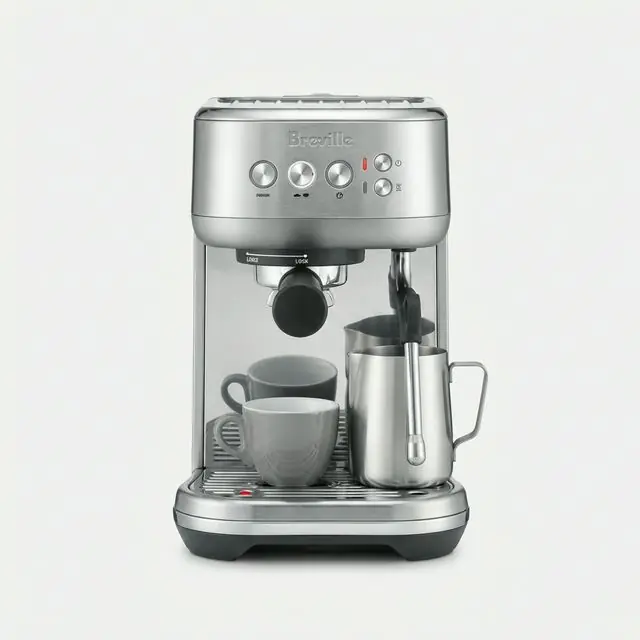
Breville Bambino Plus Review (2026): The Best Small Machine for Decaf Espresso?
A decaf-first look at the compact Breville Bambino Plus: why the 3-second heat-up makes it the best small espresso machine for evening decaf drinkers.
Read More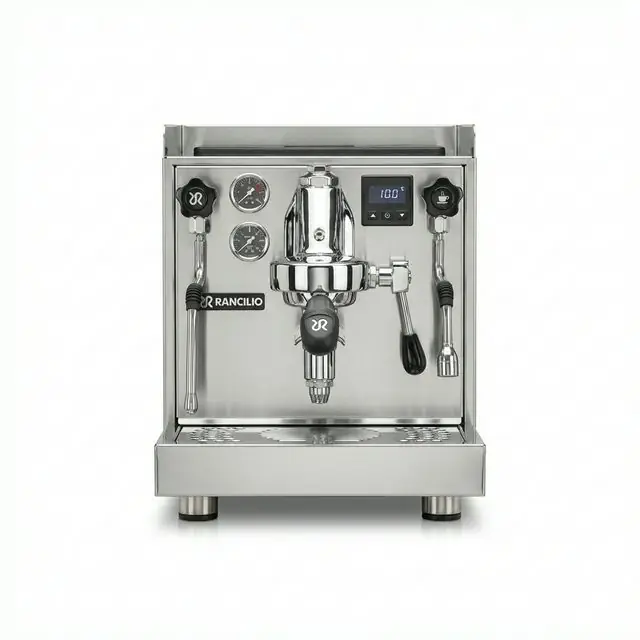
Rancilio Silvia Pro X Review (2026)
Marcus Vane dives deep into the Rancilio Silvia Pro X. With dual boilers and soft-infusion, is this the ultimate home espresso machine?
Read More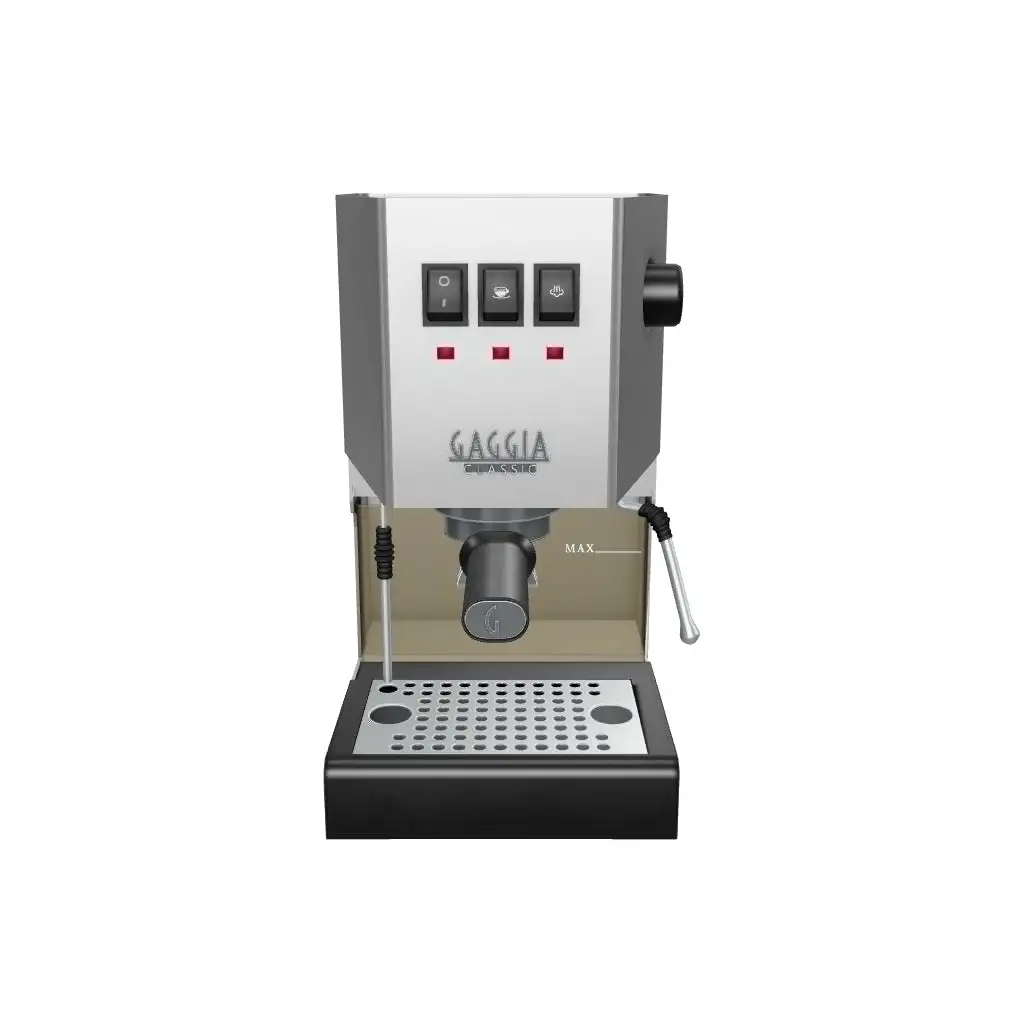
Gaggia Classic Pro Review (2026)
An Italian icon updated for 2026. Marcus Vane reviews the Gaggia Classic Pro (RI9380/47) to see why it remains the favorite of the enthusiast community.
Read MoreEnjoyed this article?
Follow us for more practical espresso and decaf insights delivered to your inbox.