Niche Zero vs DF64 Gen 2: Which to Buy
As an Amazon Associate I earn from qualifying purchases.
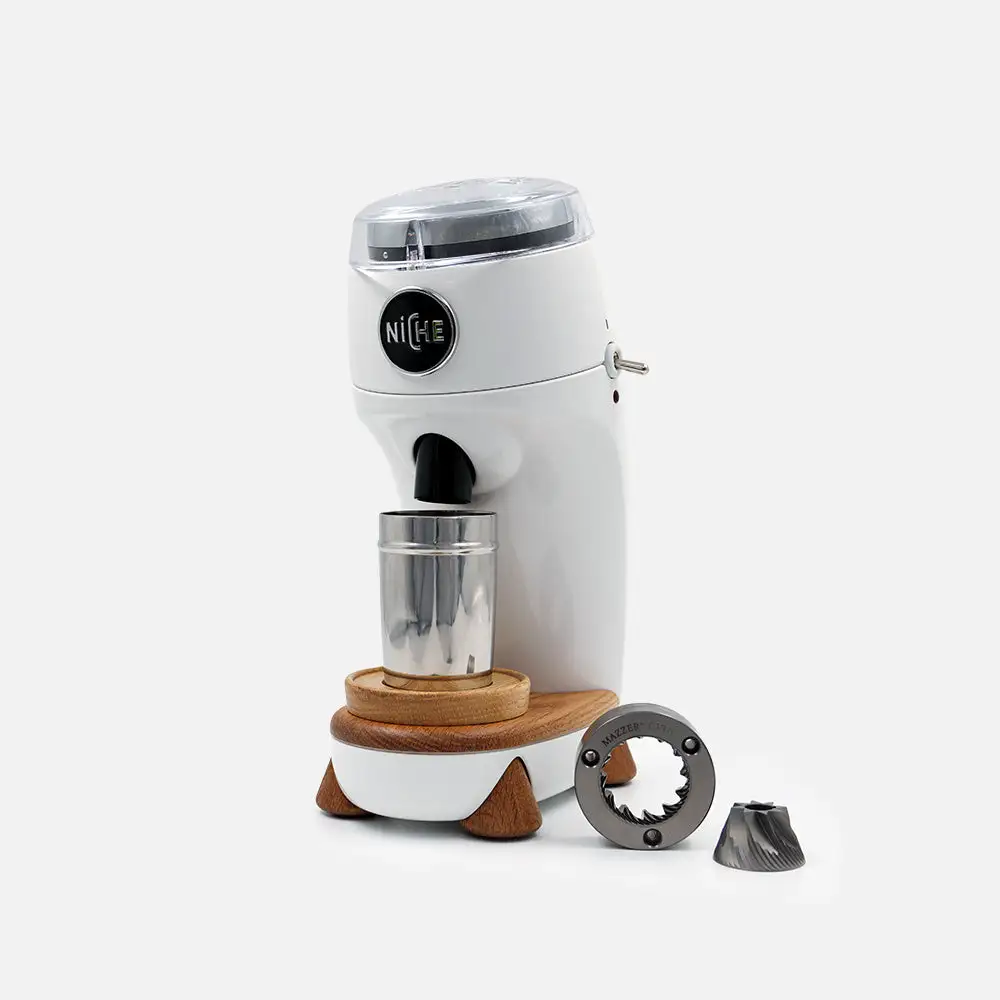
Whether you searched Niche Zero vs DF64 Gen 2 or DF64 Gen 2 vs Niche Zero, you are choosing between the two most-recommended single-dose grinders under $700 — and the right answer depends on your routine, not the spec sheets.
The verdict: Buy the Niche Zero if you want the cleanest, quietest daily routine, syrupy espresso body, and effortless switching between regular and decaf — its near-zero retention needs no purging. Buy the DF64 Gen 2 if you want flat-burr clarity for bright single origins, a meaningfully lower price, and a real burr-upgrade path.
Both grinders make excellent espresso, and neither will hold your shots back. The better choice is the one that matches how you actually make coffee: before work, after dinner, and especially when you switch between regular and decaf beans, which is the workflow we care about most on this site.
Quick Verdict
| Best For | Winner | Why |
|---|---|---|
| Clean daily workflow | Niche Zero | Quieter, tidier, almost zero retention |
| Light roast clarity | DF64 Gen 2 | 64mm flat burrs highlight acidity and sweetness |
| Milk drinks | Niche Zero | Conical body carries through milk |
| Burr upgrades | DF64 Gen 2 | Accepts SSP and other 64mm aftermarket burrs |
| First serious grinder | Niche Zero | Easier to live with every morning |
| Best value | DF64 Gen 2 | Similar cup quality for meaningfully less money |
| Decaf switching | Niche Zero (narrowly) | ~0.2g stated retention means no real purge between beans |
| Quiet kitchens | Niche Zero | Slower RPM, lower-pitched motor |
Taste: Conical Body vs Flat Clarity
The Niche Zero uses 63mm conical burrs, and the cup profile is classic conical: thicker texture, rounder edges, and a chocolatey, comfortable style of espresso. If your favorite shots are rich and traditional, the Niche makes that style almost effortless. It is also the safer pick for cappuccinos and lattes, because that extra body survives the trip through steamed milk.
The DF64 Gen 2 uses 64mm flat burrs, and the difference is real, not reviewer mythology. Flat burrs produce a tighter, more uniform particle distribution, which translates to more separation between flavors. With a washed Ethiopian or a bright Colombian, you taste distinct fruit and acidity where the Niche gives you a blended, rounder impression. The trade-off is body: DF64 shots can feel thinner, especially at lighter roast levels.
Here is the part most comparisons skip: this matters more for decaf than for regular coffee. Decaffeination mutes acidity and strips some of the volatile aromatics that make a coffee sparkle. A decaf that tasted lively as a regular lot often comes through flatter and more caramel-forward. With the Niche's conical profile, that muting can stack, and you end up with pleasant but slightly dull shots. The DF64's flat-burr clarity helps recover some of what processing took away, particularly with sugarcane (EA) decafs, where the fruity, winey character is exactly the kind of note flat burrs amplify.
That does not make the DF64 the automatic decaf winner. If your decafs are darker roasts and your drinks are mostly milk-based, the Niche's body is the better match. But if you chase interesting single-origin decafs like the ones in our best decaf espresso beans guide, the DF64 Gen 2 reveals more of them.
Verdict: Niche for body and comfort. DF64 for clarity, and especially for bright sugarcane and Swiss Water decafs you want to taste, not just drink.
Single-Dosing and Switching Between Regular and Decaf
Both grinders are single-dose designs: you weigh in exactly what you grind, with no hopper of stale beans sitting on top. For a household that runs regular in the morning and decaf after lunch, this is the whole reason to buy either one instead of a hopper-fed grinder.
The difference is what happens inside the grinder between doses.
Niche Zero: Niche states retention of around 0.2g, and owner weigh-in/weigh-out reports consistently back that up. Weigh in 18g, get out 17.9 to 18g, and the next dose is effectively all the new bean. Switching from regular to decaf, you just pour in the decaf and grind. No bellows, no purge dose, no ritual. For anyone strict about caffeine in the evening, this is the cleanest switch you can get without buying two grinders.
DF64 Gen 2: The Gen 2 fixed most of the original DF64's retention complaints with a redesigned declumper, better chute, and a plasma static ionizer, but it still relies on its bellows. After grinding, you pump the bellows several times to blow retained grounds out of the chamber. Do that, and exchange is good, but a small amount of the previous coffee still rides into the next dose. Switching from regular to decaf, you either accept a trace of caffeinated grounds or run a 3 to 5g purge dose of the new bean and discard it.
Is that trace meaningful? For taste, barely. For caffeine, context helps: published analyses put a decaf espresso shot around 2 to 8mg of caffeine versus roughly 60 to 75mg for regular, so half a gram of regular grounds in an 18g decaf dose adds only a small amount. If you are caffeine-sensitive enough to care about single milligrams, the Niche's near-zero retention is the safer buy. For everyone else, the bellows routine is a ten-second habit, not a dealbreaker.
How Each Handles Decaf: The Grind-Setting Offset
This is the section most comparisons never write, and it matters more than anything above if you run both regular and decaf through one grinder.
Decaf beans come out of processing more brittle and less dense than regular beans. They fracture more easily in the burrs, produce more fines, and shots run faster at the same grind setting. Switch from your regular bean to a decaf without touching the dial and you will usually watch a gusher: a shot that should run 28 seconds finishing in 20.
The fix is the same on both grinders: grind finer for decaf, and write the offset down.
On the Niche Zero, the adjustment ring is stepless with clear numbered markings, and the offset is easy to memorize. Owners typically report medium-roast espresso settings around 14 to 15, with most decafs landing 1 to 2.5 numbers finer depending on roast and process. Because the dial is large and the markings are legible, returning to a known setting takes two seconds.
On the DF64 Gen 2, adjustment is also stepless via the top collar, and the markings are finer-grained, which cuts both ways. You get more precision when dialing in a fussy decaf, but the smaller increments make it slightly easier to lose your place when jumping between two beans daily. A sticky note on the side with the current setting for each bean is the classic fix. Not elegant, but it works.
Two more decaf-specific notes:
- Fines and clumping: decaf's extra fines make static and clumping worse. The DF64's ionizer genuinely helps here, and a quick WDT stir helps on both grinders.
- Freshness: decaf stales faster, so single-dosing from a sealed container instead of a hopper is doing more work for your decaf than your regular. Both grinders win on this versus hopper grinders.
For the full routine, including dose, ratio, and temperature starting points, see our guide to dialing in decaf espresso.
Workflow, Noise, and Mess
The two grinders have distinctly different personalities in daily use, and owner reports are remarkably consistent about what they are.
The Niche Zero is the quiet, tidy one. Its motor runs at a slow RPM, so it is noticeably quieter and lower-pitched. Grinding at 6 a.m. next to a sleeping household is a non-event. Grounds drop neatly into the supplied cup with minimal static, the lid-interlock keeps fingers safe, and the wood-and-metal styling looks like furniture rather than shop equipment. Counter mess is close to zero.
The DF64 Gen 2 is the capable, slightly industrial one. It is louder and higher-pitched, though grind times are short, around 8 to 12 seconds for an espresso dose, so the noise is brief. The ionizer keeps static far better controlled than the original DF64, but you will still wipe a few stray grounds off the counter, and the bellows pump is part of every session. None of this is bad; it just asks a little more of you than the Niche does.
If your espresso happens in a shared kitchen, before dawn, or while a baby naps, the Niche's noise advantage is worth real money. If your grinder lives in a garage bar or a kitchen where nobody minds, it is irrelevant.
Upgrade Paths: Fixed Burrs vs the 64mm Ecosystem
Here is the biggest long-term difference between these grinders, and it has nothing to do with how they perform on day one.
The DF64 Gen 2 uses the standard 64mm flat-burr format, the most common aftermarket size in specialty coffee. That means you can swap in SSP burr sets, with options tuned for high clarity, multipurpose use, or a more traditional profile, as well as 64mm sets from other makers. An SSP swap costs a few hundred dollars, but it transforms the grinder into something that competes with machines at twice the price. Buy a DF64 Gen 2 today, upgrade burrs in two years, and you have effectively bought a new grinder for the cost of the burrs.
The Niche Zero is a closed system. Its 63mm Mazzer-derived conical burrs are excellent, but there is no meaningful aftermarket path. What you taste on day one is what you will taste in year five, aside from the mild improvement as burrs season. Niche would say that is the point: one well-executed profile, no tinkering, no rabbit hole.
Which philosophy is right depends on you. If you read grinder forums for fun, the DF64's upgrade path is genuinely exciting. If the phrase "burr alignment shimming" makes your eyes glaze over, the Niche's fixed, factory-sorted setup is the feature.
Long-Term Ownership: Alignment, Cleaning, Reliability
Alignment: The Niche ships well-aligned and, because conical burrs are more tolerant of small alignment errors, it stays a non-issue. Flat burrs are fussier; the DF64 Gen 2's factory alignment is much improved over early DF64s, but unit-to-unit variance exists, and serious owners sometimes check alignment with a marker test, especially after installing aftermarket burrs.
Cleaning: Both are easy by grinder standards. The Niche's burr set is accessible without tools and goes back together without losing your grind setting, which makes a monthly brush-out painless. The DF64 requires removing the collar and takes a few minutes longer, and you will want to re-zero afterward. Decaf owners should clean slightly more often on either machine, because decaf's oils and extra fines build up faster.
Reliability: Both have large owner bases and good track records. The Niche has been in the market longer with a strong support reputation; DF64 parts are cheap and widely available because the platform is so common. Neither has a pattern of failures worth flagging.
For the deeper single-product breakdowns, read our full Niche Zero review and our DF64 Gen 2 review, where we cover each grinder's quirks in more detail than a comparison allows.
Which One Should You Buy?
Skip the spec sheets and find yourself below.
- The quiet-morning decaf switcher: you run regular at 7 a.m. and decaf at 8 p.m., and you do not want a purge ritual. Buy the Niche Zero. Near-zero retention and low noise are exactly your features.
- The light-roast explorer: you buy interesting single origins, including bright sugarcane decafs, and you want to taste the difference between them. Buy the DF64 Gen 2. Flat-burr clarity earns its keep in your cup.
- The milk-drink household: lattes and cappuccinos rule, mostly medium roasts. Niche Zero. Body through milk beats clarity you will never taste under foam.
- The tinkerer on a budget: you want the best cup per dollar now and a real upgrade path later. DF64 Gen 2, with SSP burrs on your someday list.
- The set-and-forget buyer: you want one purchase, no maintenance hobby, and a grinder that disappears into the routine. Niche Zero.
- The sub-$200 budget: skip both for now. Start with a manual grinder like the 1Zpresso JX-Pro and put the savings toward fresh beans; our best espresso grinders under $500 guide maps the whole budget ladder.
Pair either grinder with a capable machine like the Gaggia Classic Pro or Breville Bambino Plus, and browse our full espresso grinder hub if neither of these two feels right.
As an Amazon Associate I earn from qualifying purchases. Buying through this link costs you nothing extra.
The Bottom Line
Run the DF64 Gen 2 vs Niche Zero question through any lens you like — workflow, taste, upgrades, decaf — and the same pattern falls out: the Niche is the better appliance, the DF64 is the better instrument.
If you switch between regular and decaf daily and value a quiet, clean routine, the Niche Zero's near-zero retention makes it the easier grinder to live with. If you want maximum flavor clarity per dollar and an upgrade path that keeps the grinder relevant for a decade, the DF64 Gen 2 is the smarter spend. Neither choice is wrong; one of them is simply more you.

Marcus Vane
Equipment SpecialistMarcus has spent over a decade in the specialty coffee industry, from managing high-volume cafes in Melbourne to technical consulting for home espresso equipment manufacturers. He specializes in thermal stability and grinder burr geometry.
You Might Also Like
Niche Zero Review (2026): Still the Single-Dosing Benchmark for Decaf Espresso
The Niche Zero redefined the home grinder market. Marcus Vane reviews the 63mm conical single-doser to see why it remains our top pick for decaf drinkers in 2026.
Read MoreBest Espresso Grinders Under $500
You don't need to spend $1,000 on a grinder. We review the 4 best espresso grinders under $500 that deliver cafe-quality grounds.
Read More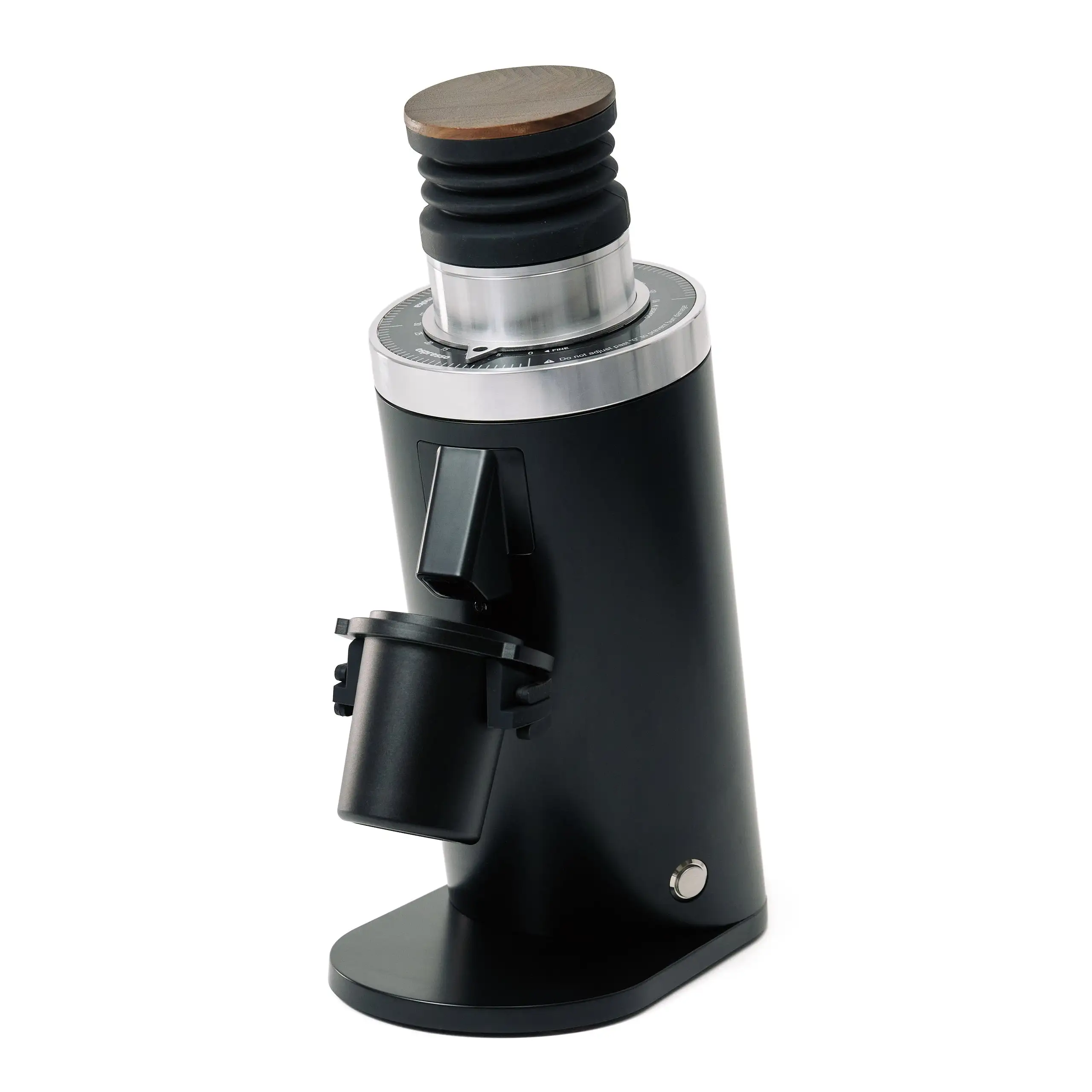
DF64 Gen 2 Review (2026): The Value Flat Burr for Decaf Drinkers
The DF64 Gen 2 fixes the original's popcorning and clumping problems and delivers serious 64mm flat-burr clarity for the money. For decaf single-dosers, it might be the smartest grinder under $500.
Read MoreEnjoyed this article?
Follow us for more practical espresso and decaf insights delivered to your inbox.