5 Best Espresso Machines for Beginners (2026)
Buying your first espresso machine is overwhelming. There are hundreds of options, conflicting advice, and a price range from $100 to $5,000. For a first setup, the safest path is not the most expensive machine. It is the machine that heats quickly, forgives beginner technique, and pairs well with a real burr grinder. We compared the current field and narrowed it to five beginner-friendly picks that can make good espresso without turning every morning into a training session. If decaf is your main coffee, our best espresso machine for decaf guide ranks machines on how they handle it.
Quick Picks
| Pick | Machine | Best For | Price |
|---|---|---|---|
| Top Pick | Breville Bambino Plus | Speed and simplicity | Mid-range |
| Runner Up | Gaggia Classic Pro | Learning the craft | Mid-range |
| Best Budget | AMZCHEF 20-Bar | Tight budgets | Budget |
| Best All-in-One | Breville Barista Express | Built-in grinder | High-end |
| Best Super-Auto | DeLonghi Magnifica Start | One-touch convenience | Mid-range |
Price tiers are our own rough budget bands, not live prices. Check the listing for today's price.
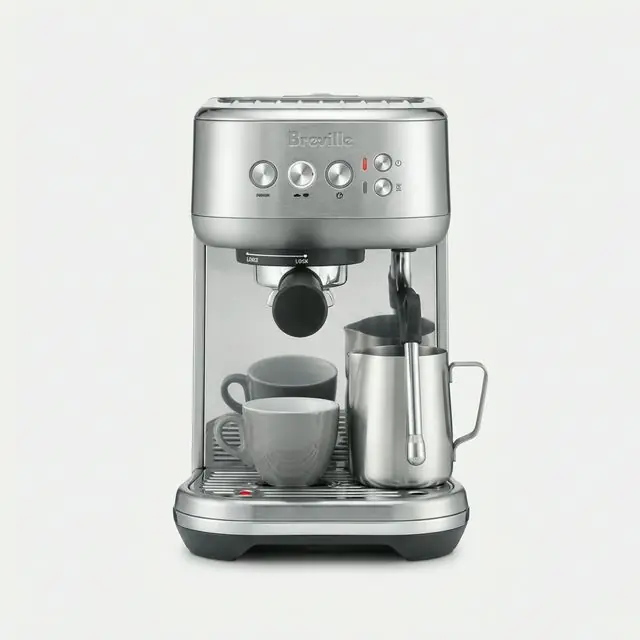
1. Breville Bambino Plus — Our Top Pick
The Breville Bambino Plus is the machine we recommend to almost every beginner. It heats up in 3 seconds, has automatic milk texturing, and produces shots that rival machines costing twice as much.
Why beginners love it: The automatic steam wand removes the hardest part of making espresso drinks. Set it to "Medium" froth, press the button, and you get latte-art-capable microfoam every time.
The catch: You need a separate grinder. We recommend the 1Zpresso JX-Pro if you are on a budget.
2. Gaggia Classic Pro — Best for Learning
The Gaggia Classic Pro is a tank. Its 58mm commercial portafilter means you are learning on the same equipment cafes use. It is fully manual, and incredibly rewarding once you learn temperature surfing.
Why beginners love it: Once you master this machine, you can use any machine in the world. It teaches fundamentals that automatic machines hide from you.
The catch: Single boiler means you wait between brewing and steaming. Temperature surfing has a learning curve.
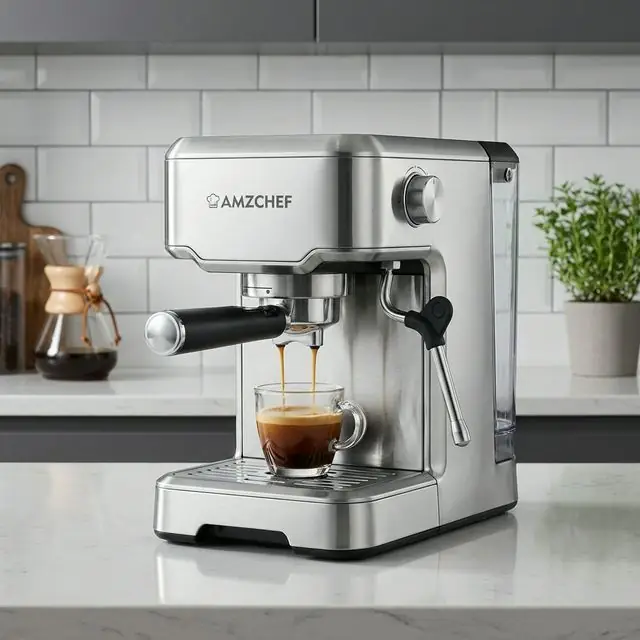
3. AMZCHEF 20-Bar — Best Budget
The AMZCHEF 20-Bar proves you do not need to spend a fortune to make real espresso at home. PID temperature control at this price point is remarkable. Our full AMZchef 20-bar review covers shot quality, milk frothing, and how it handles decaf.
Why beginners love it: It is genuinely affordable and produces drinkable espresso with a real crema. The 360-degree steam wand is a nice bonus at this price.
The catch: Build quality is lighter than premium machines, and the non-standard basket limits your upgrade path.
If the AMZCHEF listing is out of stock or priced higher on the day, the CASABREWS CM5418 is the closest alternative: same budget tier, pressurized baskets, a manual steam wand and a pressure gauge.
4. Breville Barista Express — Best All-in-One
The Breville Barista Express bundles a conical burr grinder into the machine itself. For beginners who do not want to buy a separate grinder, this is the most convenient option.
Why beginners love it: One purchase, and you are brewing. The built-in grinder is good enough to produce excellent espresso, and the manual steam wand teaches you milk technique.
The catch: If you outgrow the built-in grinder, you are stuck with an expensive machine feature you are not using.
5. DeLonghi Magnifica Start — Best Super-Auto
The DeLonghi Magnifica Start grinds, tamps, and brews with one button press. If you want espresso without any learning curve at all, this is your machine.
Why beginners love it: True one-touch operation. Dishwasher-safe parts make cleanup easy.
The catch: You sacrifice control. You cannot adjust grind size as precisely or steam milk to latte-art quality.
Which Beginner Machine Should You Buy?
If you want the simplest serious setup, buy the Breville Bambino Plus and put the rest of the budget into a grinder. If you want to learn traditional espresso technique, choose the Gaggia Classic Pro. If price is the blocker, the AMZCHEF 20-Bar is the cheapest machine here that still belongs in the conversation. If you do not want separate gear, the Barista Express and Magnifica Start trade upgrade flexibility for convenience.
Buying Advice for Beginners
- Budget at least $150 for a grinder unless you buy an all-in-one or super-auto. The grinder matters more than the machine.
- Start with medium-dark roasted beans. They are more forgiving to extract than light roasts. The Specialty Coffee Association defines extraction standards that help guide what "properly extracted" means.
- Buy a scale. An inexpensive kitchen scale that reads to 0.1g will improve your espresso more than any machine upgrade.
- Water matters more than you think. The SCA Water Quality Standard recommends 150 mg/L total dissolved solids for optimal extraction. Filtered tap water or a simple Brita pitcher is a good starting point.
Best Decaf Espresso Editorial Team
Research-based reviewsWe research every machine, grinder and bean from manufacturer specs, manuals and long-term owner reports, and we read them with decaf in mind. We don't run in-house tests.
You Might Also Like
Is a 20 Bar Espresso Machine Good?
Espresso extracts at about 9 bars at the puck, so what does a 20-bar rating actually buy you? Here is what the number really measures, why marketing loves it, and what to look at instead.
Read MoreBest Espresso Machine for Decaf (2026)
Decaf is the hardest bean type to dial in. We ranked seven espresso machines that make it easier, from a budget 20-bar pick to a PID Gaggia, and explain the features that actually matter for decaf.
Read More
Gaggia Classic Pro Decaf Settings: Dose, Grind & Temp Guide
Decaf runs fast and punishes sloppy temperature on a single-boiler machine. Here are our exact Gaggia Classic Pro decaf settings: dose, yield, grind direction, and a temp-surfing routine that actually repeats.
Read MoreEnjoyed this article?
Subscribe for more practical espresso and decaf insights delivered to your inbox.