AMZCHEF 20-Bar Espresso Machine Review
As an Amazon Associate I earn from qualifying purchases.
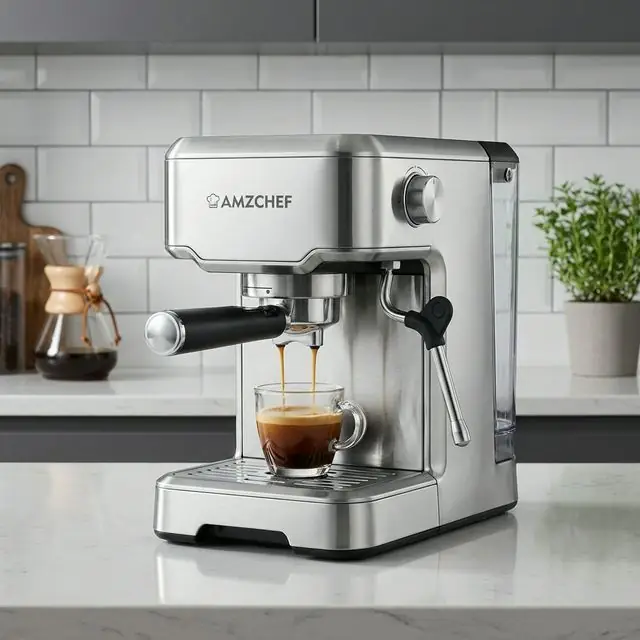
The AMZCHEF 20-Bar is a genuinely useful budget starter — and because its pressurized basket forgives the fast, fines-heavy flow of decaf beans, it handles decaf espresso surprisingly well for the price. It is not a shortcut to cafe-quality straight espresso, and it will never match a Breville Bambino Plus on temperature stability or milk texture. But if you mostly drink decaf lattes and your budget stops under $200, this little machine earns its counter space.
The AMZCHEF 20-Bar has been on our budget shortlist for months, and this review pulls together the full picture from spec analysis, owner feedback, and published measurements: where it punches above its price, where it falls flat, and exactly how to dial it in for decaf.
| Buyer | Verdict | Why |
|---|---|---|
| Decaf latte drinker under $200 | Good fit | Forgiving basket smooths over decaf's fast-flow quirks |
| Latte beginner on a strict budget | Consider it | Usable steam wand and simple programmable shots |
| Straight espresso drinker | Skip it | Flavor clarity and crema lag behind better machines |
| Long-term home barista | Save for the Bambino Plus | Better thermals, 54mm ecosystem, real upgrade path |
Key Features
- 20-bar pump: The headline spec sounds powerful, but pressure alone does not make better espresso. More on that below.
- PID temperature claims: Regulation is better than the cheapest machines in this class, but it is not in the same league as Breville's thermojet system.
- Pressurized portafilter: The basket generates crema-style foam even from imperfect grinds. That is a feature for beginners and a ceiling for enthusiasts.
- Programmable single and double buttons: Convenient for repeatable casual shots.
- Compact body: It fits apartment counters and dorm kitchens without fuss.
- Steam wand: Strong enough for basic lattes and cappuccinos, slow but workable.
20 Bar vs 9 Bar: What the Spec Really Means
Budget machines love advertising 15 or 20 bars because the number sounds impressive. Real espresso extracts at roughly 9 bars at the puck. A bigger pump rating describes what the pump can do at peak, not what your coffee experiences, and pushing harder can actually make shots harsher when the grind and basket are not well controlled.
The AMZCHEF manages this with its pressurized portafilter. A small valve restricts flow and froths the espresso as it exits, which is why even supermarket pre-ground produces something that looks like a proper shot. The trade-off is honesty: the shot looks better than it tastes when you compare it against an unpressurized setup fed by a real burr grinder. For beginners, that forgiveness is mostly a good thing. For anyone hoping to learn serious dialing-in technique, it hides the feedback you need.
For the full story on bar ratings — why 9 bars became the standard, why boxes advertise 15 or 20, and what specs actually predict good espresso — see our explainer: is a 20 bar espresso machine good?
How It Handles Decaf
This is where the AMZCHEF genuinely surprises. Decaf beans come out of processing more brittle and less dense than regular beans, so they shatter into more fines at the grinder and tend to gush through the puck faster. On an unpressurized machine that means constant grind adjustments and a real risk of sour, watery shots until you nail the recipe. The AMZCHEF's pressurized basket acts like a safety net: even when decaf flows fast, the valve maintains enough back-pressure to pull a drinkable shot.
That does not mean you can ignore the grind entirely. Decaf still rewards a finer setting and a slightly longer ratio than regular beans. Here are our recommended starting points for dialing in — treat these as a first puck, not gospel, and adjust by taste from there:
| Coffee | Dose (g) | Yield (g) | Time (s) | Temp |
|---|---|---|---|---|
| Regular beans | 16 | 32 | 25–30 | Default double-shot setting |
| Decaf beans | 16 | 36–40 | 24–30 | Default (run a blank flush first to preheat) |
Three decaf-specific habits make the biggest difference on this machine:
- Grind finer than you think. Start one or two steps tighter than your regular setting. Decaf runs fast, and the AMZCHEF's basket will not punish you for going slightly too fine the way an unpressurized basket would.
- Expect faster flow and a thinner crema. Decaf crema is naturally lighter and dissipates quicker, and the pressurized basket's foam partly masks that. Judge the shot by taste, not appearance.
- Stretch the ratio. Decaf often tastes better pulled a touch longer — closer to 1:2.3 or 1:2.5 — which softens the slightly muted sweetness most decafs carry.
Freshness matters more for decaf too, since its flavor window is shorter. Pair the machine with recently roasted beans from our best decaf espresso beans guide, and if you want the full method — ratios, troubleshooting fast shots, temperature tweaks — our dialing in decaf espresso guide walks through it step by step.
The bottom line: for a decaf-first household on a budget, the AMZCHEF's forgiving basket is genuinely an asset rather than a compromise. It turns decaf's most annoying trait — fast, inconsistent flow — into a non-issue.
Espresso Performance: The Realistic Limitations
Now the honest part. Straight espresso from the AMZCHEF is decent and strong, but it is flatter and less complex than what a Breville Bambino Plus produces with the same beans. The differences show up in three places:
Temperature stability. The AMZCHEF's regulation is fine for milk drinks, but shot-to-shot temperature drifts more than Breville's heating system allows. With regular coffee you may not notice. With lighter decafs, where you often want a slightly hotter brew to coax out sweetness, the drift is harder to work around.
Basket ceiling. The pressurized portafilter caps how good a shot can get. The Bambino Plus ships with pressurized baskets too, but it accepts standard 54mm unpressurized baskets, so it grows with you when you eventually buy a proper grinder. The AMZCHEF does not offer a meaningful upgrade path here.
Crema and clarity. The foam the AMZCHEF generates is uniform and pale rather than the dense, marbled crema a good unpressurized shot produces. In milk it disappears entirely, which is why this machine makes much more sense for latte drinkers than for anyone sipping straight shots.
None of this is a dealbreaker at the price. It is simply the difference between a $150-class machine and a $300-class machine, and you should know which side of that line your taste falls on before you buy.
Milk Frothing Reality Check
The steam wand overperforms for the price, but keep expectations calibrated. Steaming takes noticeably longer than on the Bambino Plus — budget 45 to 75 seconds for a latte's worth of milk versus the Breville's rapid, automatic texturing. The pressure is modest, so you have to keep the tip just below the surface early to stretch the milk, then submerge to spin it.
With practice you will get glossy milk that pours a basic heart. You will not get competition-grade microfoam, and latte-art rosettas are mostly out of reach. It is, however, a clear step up from a handheld frother, and for cappuccinos the slightly bubblier texture honestly does not matter much. If silky, hands-off milk is the main event for you, that alone justifies stretching to the Bambino Plus, whose automatic frothing is the best in its class.
Bundles: Should You Buy It With a Grinder?
If you see the AMZCHEF sold as a complete setup with a grinder, treat the grinder as the deciding part of the deal. A blade grinder or a vague "espresso capable" electric grinder will hold the whole setup back, and the pressurized basket will hide the problem instead of teaching you to fix it.
Our advice: buy the machine alone and put any extra budget toward a capable manual burr grinder with fine adjustment. The grinder matters more than the machine at this price, and that stays true when you upgrade later.
Maintenance and Descaling
Budget machines live or die by upkeep, and the AMZCHEF asks for a simple but non-negotiable routine:
- Daily: Purge the steam wand before and after every use and wipe it immediately. Knock out the puck, rinse the basket, and run a few seconds of water through the empty portafilter.
- Weekly: Pull the basket out of the portafilter and scrub both. The pressurizing valve clogs with fines — decaf's extra fines make this more frequent, not less — and a clogged valve is the number-one cause of weak, sputtering shots on this machine.
- Every 1–3 months: Descale with a citric-acid or commercial espresso descaler, depending on your water hardness. The boiler is small, so scale chokes flow and temperature quickly. Run the descaling solution through both the brew path and the steam wand, then flush thoroughly with at least two full tanks of fresh water.
Use filtered water if your tap water is hard. There is no replaceable water filter in the tank, so prevention is the whole strategy. Treated well, there is no obvious reason this machine cannot last a few years of daily lattes; neglected, the small thermoblock scales up fast.
Who Should Buy It — and Who Should Save
Buy the AMZCHEF if:
- You drink mostly decaf or regular milk drinks and your hard ceiling is around $200.
- You are testing whether home espresso is for you before committing real money.
- You use pre-ground coffee and are not ready to buy a grinder yet.
- Counter space is tight and you want something compact and simple.
Save for something better if:
- You can stretch to roughly double the price — the Bambino Plus is the obvious move, with better thermals, automatic milk, and a real upgrade path.
- You drink straight espresso and care about clarity, sweetness, and genuine crema.
- You want to learn unpressurized technique from day one.
For the broader landscape, our home espresso machine hub ranks everything we currently recommend, and our best espresso machines for beginners guide lays out the full budget ladder from this machine up.
As an Amazon Associate I earn from qualifying purchases. Buying through this link costs you nothing extra.
Verdict
The AMZCHEF 20-Bar is a training-wheel espresso machine in the best sense: affordable, forgiving, and honest about what it is once you understand the pressurized basket. For decaf drinkers specifically, that forgiveness is a quiet superpower — fast-flowing, brittle decaf beans that frustrate beginners on stricter machines pull drinkable shots here with minimal fuss.
Keep it clean, grind finer for decaf, judge shots by taste rather than crema, and it will make a perfectly pleasant latte every morning. Just go in knowing the ceiling: when you start wanting more from straight espresso, the upgrade is a new machine, not a new technique.
Editorial rating: 4.2/5 — our opinion of the machine's value for a budget-constrained, decaf-leaning buyer, based on comparative research and owner feedback rather than in-house lab testing. As a pure espresso instrument it would rate lower; as a first machine at this price, little else comes close.
Budget Barista
Value Equipment ReviewerOur Budget Barista specializes in finding the best espresso gear under $500. Every review answers one question: is it worth the money for a home brewer on a real-world budget?
You Might Also Like
Is a 20 Bar Espresso Machine Good?
Espresso extracts at about 9 bars at the puck, so what does a 20-bar rating actually buy you? Here is what the number really measures, why marketing loves it, and what to look at instead.
Read More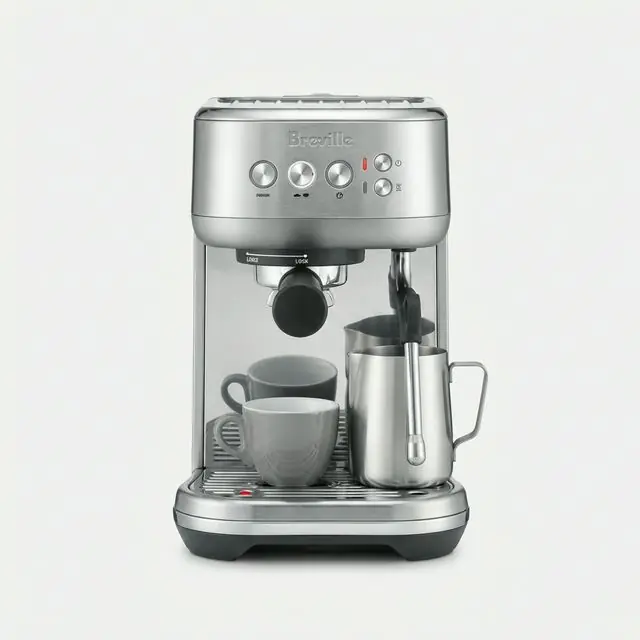
Breville Bambino Plus Review (2026): The Best Small Machine for Decaf Espresso?
A decaf-first look at the compact Breville Bambino Plus: why the 3-second heat-up makes it the best small espresso machine for evening decaf drinkers.
Read More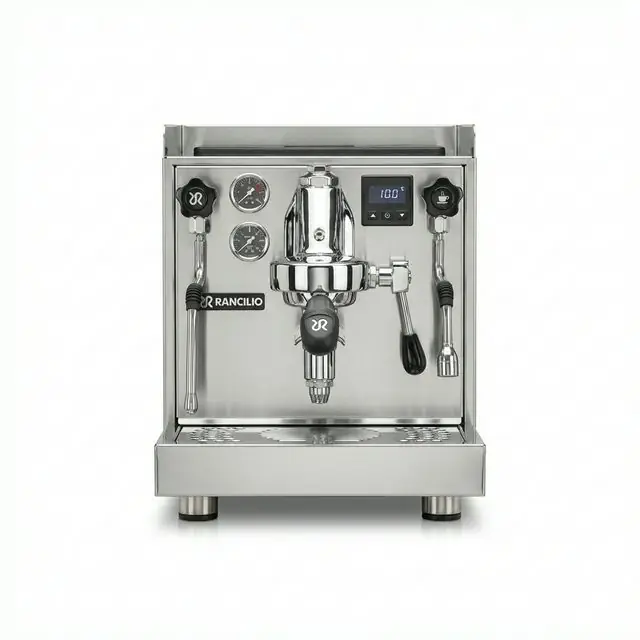
Rancilio Silvia Pro X Review (2026)
Marcus Vane dives deep into the Rancilio Silvia Pro X. With dual boilers and soft-infusion, is this the ultimate home espresso machine?
Read MoreEnjoyed this article?
Follow us for more practical espresso and decaf insights delivered to your inbox.