Hario V60 Guide for Clean Cups
As an Amazon Associate I earn from qualifying purchases.
The Hario V60 is the gold standard for pour-over coffee, and also the brewer most likely to sit unused on a shelf because people get frustrated with inconsistent results. This guide lays out a repeatable method that works, explains exactly why beginners struggle with the V60, and covers how to fix it — including a dedicated decaf recipe, because decaf behaves differently in a cone brewer.
This guide gives you a reliable recipe, explains the technique that matters most, and does not pretend the V60 is easy. It is not. But the coffee it produces when dialed in is worth the learning curve.
Why the V60 shape matters
The V60's 60-degree cone angle and interior spiral ridges are not decorative. The cone shape funnels water through a single point at the bottom, which means every drop of water passes through the entire depth of the coffee bed. Compare that to flat-bottom brewers like the Kalita Wave, where water exits through multiple small holes and the bed depth is shallower.
The spiral ridges keep the paper filter slightly separated from the wall, creating air channels that allow the brew to drain freely. This means flow rate is controlled almost entirely by your grind size and pour technique, not by the brewer geometry. That is both the V60's greatest strength and the reason it frustrates beginners. The brewer gives you total control, which means it also gives you total responsibility for the result.
What you need
- Hario V60 02 (ceramic, plastic, or glass, they all work; ceramic retains heat best)
- Hario V60 tabbed paper filters (or Cafec, a worthwhile upgrade)
- Gooseneck kettle with temperature control, this is non-negotiable for V60 brewing
- Burr grinder capable of consistent medium-fine grinds
- Scale with a timer
- 15 grams of coffee for a single cup (250ml target yield)
The James Hoffmann method
Of the popular V60 techniques, a version of James Hoffmann's method is the one we recommend as a daily go-to. It is straightforward and produces consistent results once you nail the grind size.
Ratio: 1:16.6, so 15 grams coffee to 250 grams water for a single cup. Scale up to 30:500 for two cups.
Water temperature: 205 degrees Fahrenheit (96 Celsius) for medium and dark roasts. For light roasts, go full boiling at 212F (100C), as light roasts need more thermal energy to extract properly.
Grind size: Medium-fine. Finer than a Chemex, coarser than espresso. Think table salt. This is the single most important variable and the one you will adjust most often.
The pour
0:00 - Bloom. Pour 45 grams of water (three times the dose) in a quick spiral to saturate all the grounds. Give the V60 a gentle swirl to make sure there are no dry spots. Wait 45 seconds.
0:45 - Main pour begins. Pour in a slow, steady, concentric circle from the center outward, staying about a centimeter from the filter wall. Add water at a pace that brings you to 150 grams by the 1:15 mark.
1:15 - Continue pouring. Keep the same spiral pattern and flow rate, reaching 250 grams by about 1:45.
1:45 - Swirl and drain. Give the V60 one gentle swirl to knock any grounds off the filter walls and flatten the bed. Let it drain completely. Total brew time should land between 2:45 and 3:30 for a single cup.
After draining, look at the spent coffee bed. It should be relatively flat with an even layer of grounds. If you see a deep divot in the center, your pour is too focused. If grounds are plastered high up the filter walls, you are pouring too wide or too aggressively.
The 4:6 method (Tetsu Kasuya)
If you want more control over the balance of sweetness and acidity, Tetsu Kasuya's 4:6 method is worth learning. The concept is simple: the first 40 percent of your water controls the sweetness-to-acidity balance, and the remaining 60 percent controls strength.
For 20 grams of coffee and 300 grams of water, you pour in five equal pours of 60 grams each, waiting for the water to drain between pours. To make the cup sweeter, pour more water in the first pour and less in the second. To emphasize acidity, do the opposite.
This method uses a coarser grind than the Hoffmann method and produces a different cup profile. It is more forgiving for beginners because the pause-and-drain approach gives you natural checkpoints, but it takes longer and requires more attention.
Dialing in your grind
This is where most V60 frustration lives. The difference between a sour, watery cup and a sweet, balanced one is often just one or two grind clicks.
If your brew drains in under 2:30 and tastes sour, thin, or tea-like: grind finer. You are under-extracting.
If your brew takes over 4:00 and tastes bitter, harsh, or astringent: grind coarser. You are over-extracting.
If the brew time is right but it tastes flat: your water may not be hot enough, or your coffee may be stale. Freshly roasted beans (7 to 21 days off roast) make a dramatic difference with V60 brewing.
Decaf V60 recipe
Decaf is not just regular coffee minus the caffeine. Decaffeination happens to green coffee before roasting: the beans are soaked, swollen, and dried again, and that cycle permanently weakens their cell structure. At the V60, that shows up in three ways:
- Decaf grinds finer than the dial says. Brittle beans shatter rather than fracture cleanly, so the same grinder setting produces an effectively finer, dustier grind with noticeably more fines. Those fines migrate through the bed during the brew and can clog the filter, stalling the drawdown.
- Decaf extracts faster. Water pulls solubles out of the weakened cell structure more quickly, so a recipe timed for caffeinated beans tends to over-extract decaf and land bitter or drying.
- Decaf off-gasses CO2 sooner. The more porous beans release their roast gases faster, so the bloom is smaller and flatter, and the freshness window is shorter. A decaf that is six weeks past roast brews like a coffee that is three months old.
The counterintuitive consequence: even though decaf extracts faster, you compensate by grinding coarser than you expect and handling the bed more gently, not by rushing the brew.
The recipe, adjusted for decaf
Everything not listed here stays the same as the main recipe above.
- Dose and ratio: unchanged — 15 grams to 250 grams of water (1:16.6).
- Grind: start one to two clicks coarser than your caffeinated V60 setting for the same roast level. If you are starting from scratch, aim at the coarse end of medium-fine.
- Water temperature: 203F (95C) for medium and dark decafs, a couple of degrees below the main recipe. Because decaf gives up solubles so readily, the top of the temperature range pushes it into harshness. Light-roast decafs can still take 205F (96C).
- Bloom: pour the same 45 grams, but gently and low to the bed — and skip the bloom swirl. Agitation is what drives fines into the filter, and decaf has more fines to move. If you see dry spots, tilt the brewer slightly instead of swirling. Expect less bubbling than with caffeinated beans; a quiet bloom does not mean the coffee is stale, just decaffeinated. Wait the same 45 seconds.
- Main pour: same schedule — 150 grams by 1:15, 250 grams by about 1:45 — but pour lower and slower, keeping the spiral tight to minimize agitation.
- Finish: one very gentle swirl at most, or none if your drawdowns have been slow. Target a total brew time of 2:30 to 3:15, slightly quicker than the caffeinated target, which is fine because decaf extracts faster.
If the cup lands bitter or drying, go coarser or drop the temperature a degree or two before changing anything else. If the drawdown stalls past 4:00, that is fines clogging the filter: go coarser and pour more gently rather than finer. Sour, thin cups are less common with decaf than with regular beans; if you get one, tighten the grind by a single click.
Freshness matters more here than anywhere else in this guide. Buy decaf in small bags with a printed roast date and use it within about four weeks — our best decaf espresso beans roundup flags roasters that date their bags properly, and most of those beans work beautifully as pour-over. And if you also pull decaf shots, the same brittle-bean behavior explains why decaf gushes on espresso machines; our dialing in decaf espresso guide covers that side of it.
Pros
- Total control over extraction gives you the ability to make an exceptional cup
- Very affordable entry point, a plastic V60 and pack of filters costs under $15
- Filters and accessories are widely available everywhere
- Compact and easy to store
- Produces a clean, nuanced cup that highlights origin flavors in specialty coffee
Cons
- Steep learning curve that frustrates many beginners before they see good results
- Absolutely requires a gooseneck kettle for proper pour control, adding to startup cost
- Results vary significantly with small changes in grind, pour rate, or water temperature
- Not ideal for large batches, brewing more than two cups at once is impractical
- The ceramic version is fragile and chips easily
The verdict
The Hario V60 rewards patience and practice more than any other popular brewer. The first dozen cups might disappoint you. But once you lock in your grind size and develop a consistent pour, the V60 produces a clarity and sweetness in the cup that flat-bottom brewers and immersion methods simply do not match. Pair it with a good gooseneck kettle and a decent grinder, and you have a setup that punches well above its modest price. Just accept that dialing it in is part of the process, not a flaw.
As an Amazon Associate I earn from qualifying purchases. Buying through this link costs you nothing extra.
Best Decaf Espresso Team
Editorial TeamOur collective of home baristas and coffee professionals work together to test every machine, grinder, and bean we review.
You Might Also Like
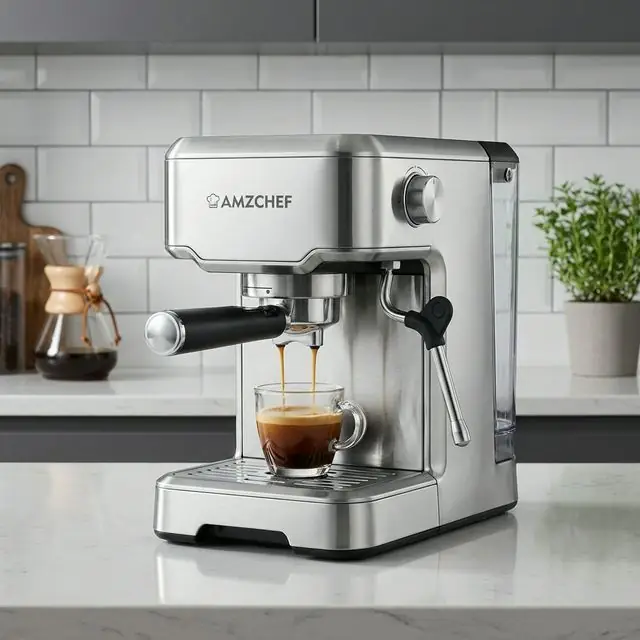
Is a 20 Bar Espresso Machine Good?
Espresso extracts at about 9 bars at the puck, so what does a 20-bar rating actually buy you? Here is what the number really measures, why marketing loves it, and what to look at instead.
Read More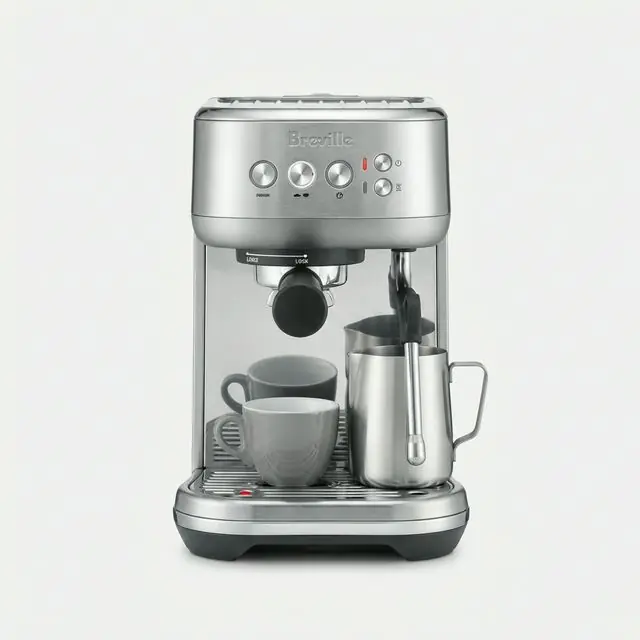
Breville Bambino Plus Review (2026): The Best Small Machine for Decaf Espresso?
A decaf-first look at the compact Breville Bambino Plus: why the 3-second heat-up makes it the best small espresso machine for evening decaf drinkers.
Read More
Why Is Decaf Coffee So Expensive Now? (2026)
Decaf now costs as much as the good stuff, and bags keep shrinking. Four structural causes explain it, none of them are your roaster gouging you, and one is easing in 2027.
Read MoreEnjoyed this article?
Follow us for more practical espresso and decaf insights delivered to your inbox.