Chemex Brewing Guide and Setup
As an Amazon Associate I earn from qualifying purchases.
The Chemex is one of the few coffee brewers that belongs in an art museum, and it literally is in the MoMA permanent collection. But pretty does not mean easy. After brewing hundreds of pots on the 6-Cup Classic, we have a reliable method that produces a clean, sweet cup every time, and some hard-won notes about what trips people up.
This is a practical brewing guide based on what actually works in our daily routine, not theoretical perfection.
What you need
Before you start, gather your equipment. Skipping any of these leads to inconsistent results.
- Chemex 6-Cup Classic (the one with the wood collar and leather tie)
- Chemex bonded filters (the thick, square ones, not generic pour-over filters)
- Gooseneck kettle with temperature control (we use a Fellow Stagg EKG)
- Burr grinder set to medium-coarse (roughly the texture of sea salt)
- Scale accurate to 0.1 grams
- Timer (your phone works fine)
- 42 grams of coffee for a full 6-cup batch (roughly 700ml of water)
The Chemex filter difference
This matters more than most people think. Chemex filters are 20 to 30 percent thicker than standard pour-over filters. That extra thickness absorbs more oils and traps more fine particles, which is exactly why Chemex coffee tastes so clean and bright compared to a V60 or Kalita Wave.
The tradeoff is that those thick filters also slow down your draw-down time and remove some of the body that oil contributes. If you love the heavy mouthfeel of a French press, the Chemex will taste thin to you. If you love clarity and sweetness, the Chemex is unmatched.
Always rinse your filter with hot water before brewing. This removes the papery taste and preheats the glass. Pour the rinse water out through the spout before adding coffee.
Step-by-step brew method
Ratio: 1:16.5, which means 42 grams of coffee to 700 grams of water. Adjust to taste, but this is our reliable starting point.
Water temperature: 200 to 205 degrees Fahrenheit (93 to 96 Celsius). If you do not have a temperature-controlled kettle, let boiling water sit for 30 seconds.
Grind size: Medium-coarse. Coarser than a V60 setting, finer than a French press. If your total brew time runs over 5 minutes, grind coarser. Under 3.5 minutes, grind finer.
The pour
0:00 to 0:45 - The bloom. Pour 80 to 100 grams of water in a slow spiral, wetting all the grounds evenly. You will see the coffee bed rise and bubble as CO2 escapes. This is the bloom, and it is essential for even extraction. Let it sit until the bubbling slows, about 30 to 45 seconds. Stir gently with a chopstick if you see dry patches.
0:45 to 2:00 - First main pour. Pour in a steady, slow spiral from the center outward, stopping about a finger-width from the edges. Add water until your scale reads about 400 grams. The key is a steady, controlled flow. Do not pour too fast or you will create channels where water rushes through without extracting properly. Keep the water level relatively consistent rather than flooding and draining.
2:00 to 3:00 - Second pour. Continue the same spiral pattern, bringing the total to 700 grams. Maintain a steady flow rate and keep your pour away from the filter walls. Pouring directly on the paper creates a bypass channel where water runs down the glass without touching coffee, diluting your brew.
3:00 to 4:30 - Draw-down. Let the remaining water drain through. Total brew time including the bloom should land between 4 and 5 minutes. If it runs much longer, your grind is too fine or you poured too aggressively and clogged the filter bed.
Remove the filter, give the Chemex a gentle swirl to mix the brew, and serve.
Common mistakes and fixes
Brew takes over 5 minutes: Grind coarser. The thick Chemex filter already slows things down, so you need a coarser grind than most pour-over guides suggest.
Tastes sour and thin: Your water is not hot enough, your grind is too coarse, or you are not blooming long enough. Try extending the bloom to a full 45 seconds.
Tastes bitter and harsh: Your water is too hot, your grind is too fine, or you are pouring too aggressively and over-extracting. Back off on temperature or coarsen your grind by one or two clicks.
Small batches taste bad: The Chemex 6-Cup is designed for 500 to 700ml batches. Brewing a single cup (250ml) in it leads to poor extraction because the coffee bed is too thin. If you need a single serving, use a smaller brewer.
Pros
- The cleanest, most transparent cup of any manual brewer we have tested
- Gorgeous design that doubles as a serving carafe
- Perfect for brewing multiple cups at once, great for having guests over
- Thick filters eliminate almost all sediment and bitterness
- Borosilicate glass does not retain flavors between brews
Cons
- Proprietary filters are expensive at roughly $10 for 100 and you cannot substitute generic ones without changing the flavor profile
- The glass body is fragile and one drop on a hard floor usually means a shattered carafe
- Brew times run long compared to a V60 or AeroPress
- Poor at making small single-cup batches due to the brewer geometry
- No insulation, so coffee cools quickly once brewed
The verdict
The Chemex produces our favorite filter coffee, full stop. When you nail the grind and pour technique, the clarity and sweetness are genuinely special, especially with high-quality light-roast decaf beans. The learning curve is real but manageable, and the thick filters do most of the heavy lifting to keep things forgiving. Just budget for those proprietary filters and treat the glass body with respect.
As an Amazon Associate I earn from qualifying purchases. Buying through this link costs you nothing extra.
Best Decaf Espresso Team
Editorial TeamOur collective of home baristas and coffee professionals work together to test every machine, grinder, and bean we review.
You Might Also Like
Hario V60 Guide for Clean Cups
A practical V60 setup guide with grind, ratio, and pour control notes for consistent extraction — including a dedicated decaf V60 recipe with adjusted grind, temperature, and bloom.
Read MoreAeroPress Review for Daily Brewing
Our AeroPress Original verdict: why it remains the most practical coffee maker ever designed, with cup quality, durability, and travel value covered.
Read More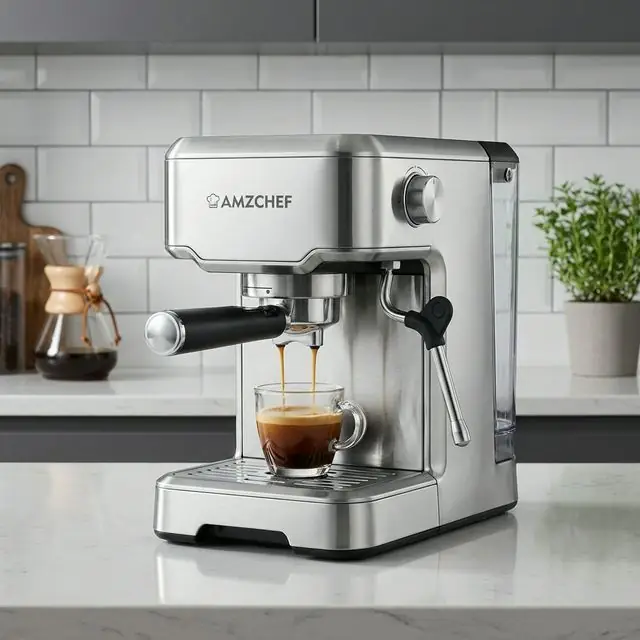
Is a 20 Bar Espresso Machine Good?
Espresso extracts at about 9 bars at the puck, so what does a 20-bar rating actually buy you? Here is what the number really measures, why marketing loves it, and what to look at instead.
Read MoreEnjoyed this article?
Follow us for more practical espresso and decaf insights delivered to your inbox.